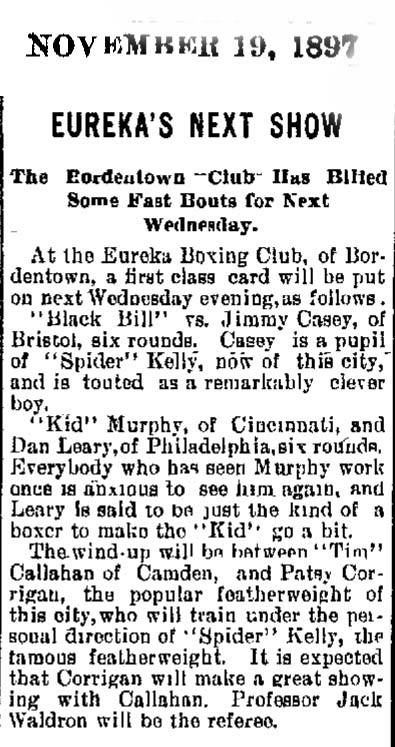
 I recently posted a photo of a notable Featherweight boxer from Trenton's past. A family member wrote in my guestbook that Mr. Kelly passed away in 1937. I found this article from 1897 referring to the Eureka Boxing Club of Bordentown. At this stage of his career, he was apparently retired as a boxer, and was the trainer of boxer Jimmy Casey and "Patsy" Corrigan,

QUESTIONS OR COMMENTS: tglover320@optimum.net
Tuesday, January 31, 2006
1897: Another "Spider" Kelly Item Found
I recently posted a photo of a notable Featherweight boxer from Trenton's past. A family member wrote in my guestbook that Mr. Kelly passed away in 1937. I found this article from 1897 referring to the Eureka Boxing Club of Bordentown. At this stage of his career, he was apparently retired as a boxer, and was the trainer of boxer Jimmy Casey and "Patsy" Corrigan,


1936: Lawrenceville Grammar School Class of '36
 It is January 31, 2006 as I enter this photo. This is one of a few selected graduation photos I am adding to the "SCHOOLS, MISC." folder in the Hamilton Township Public Library's Local History Collection.
1936 David Blackwell, Centennarian
 There are certain names that one automatically associates with a geographical area. One of those names is Blackwell. It seems that the Blackwell family proliferated in the Pennington-Hopewell area for many generations.
There is a legend about the town of Hopewell. I don't know whether it is true or not, but it is an interesting story. It seems that way back in the early years of our area as families settled in the area, they had a greeting when they met for a family get together. Legend has it that one relative would say, "Hope you are well." The relative would answer, "Am-well." Truth or a legend?
1936 Delaware River at the Foot of Cliff Street
 When I was a boy in the 1940's, the Delaware River was a very popular swimming spot. Here are lifeguards practicing their craft and keeping up with the latest in lifesaving apparatus.
1912 Amateur Radio Operators Fight Back
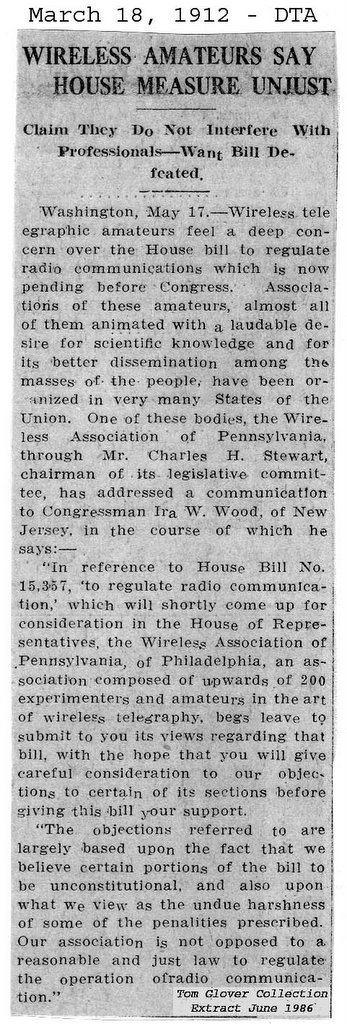 Radio was in its very early stages back in 1912. No one ever thought that it would evolve into an invaluable service in times of emergency. The article is from the month of March, 1912. In a few days, the Titanic disaster will occur, and amateur radio had a part in the disaster.
1918 Thomas Watson WWI Fatality
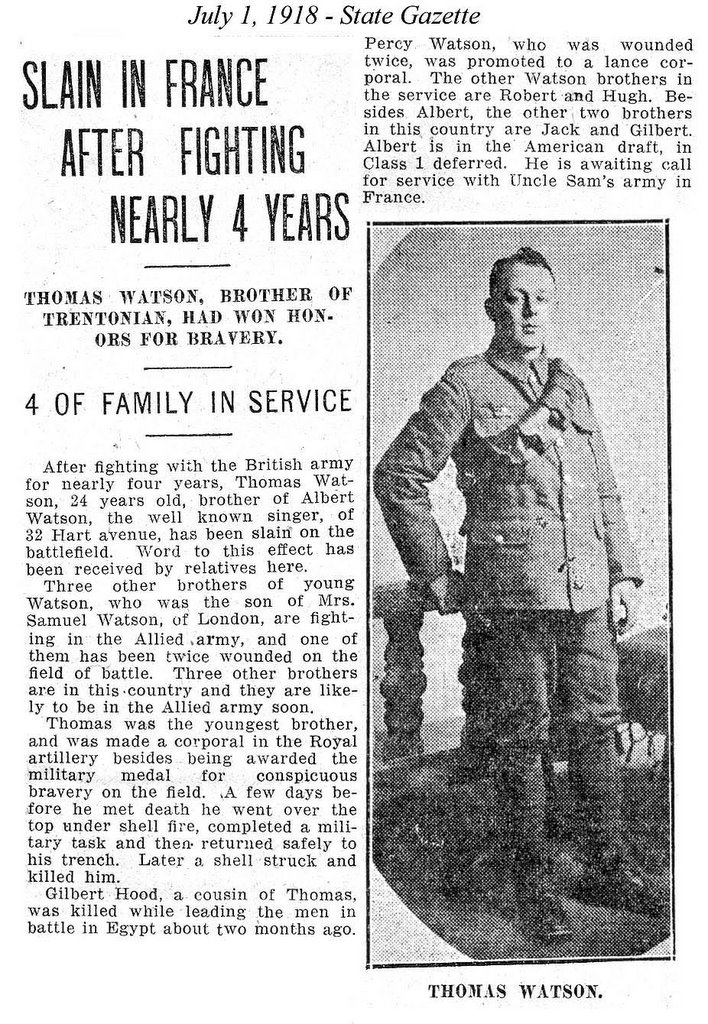 The files at the Hamilton Library will be adding to the WWI and WWII folders. There will be articles on draftees, rationing, and other war-related material.
The article and photo here is the first in what I am sure will be numerous articles on local military heroes who gave their all for our country.
Hopewell Grammar School Class of '36
 There they are, Hopewell Grammar School's class of 1936. Blackwell, Castoro, numerous familiar family names who have resided in Hopewell for generations.
 Monday, January 30, 2006
PLEASE SIGN THE GUEST BOOK
HEY! WITH 800+ "HITS" ON THIS SITE, I FIND THAT MANY FOLKS ARE NOT SIGNING THE GUESTBOOK.
===================
C'MON, IT ONLY TAKES A SECOND OR TWO! I ASSUME YOU DIDN'T SEE IT. IT'S AT THE VERY BOTTOM OF THE PAGE. YOU CAN EVEN SIGN IT "ANONYMOUS" IF YOU SO DESIRE.
=====================
THANKS!
"Spider" Kelly
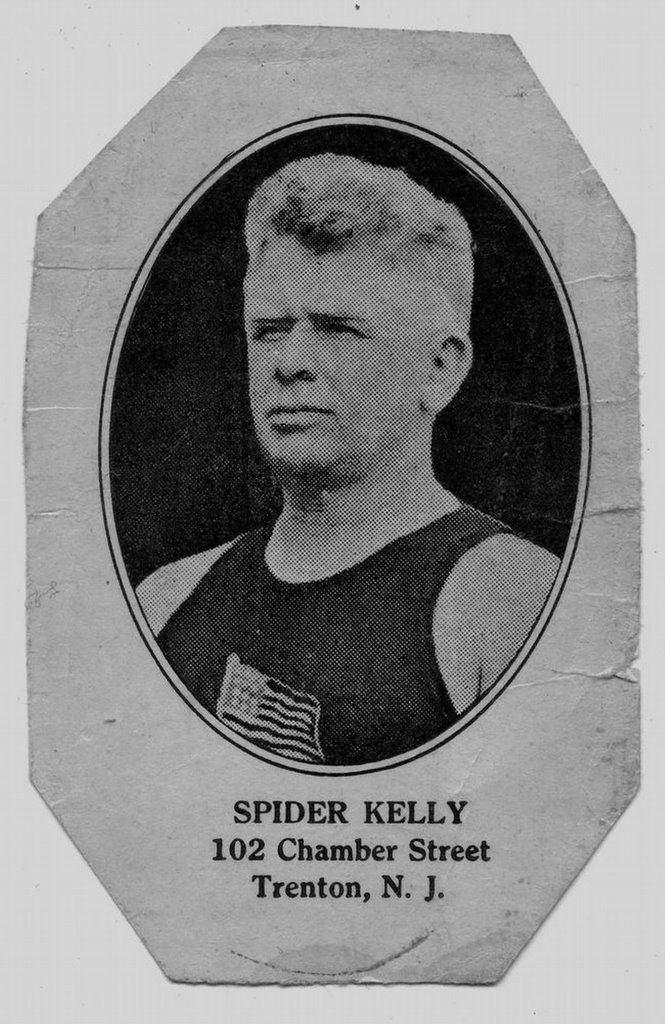
This photo came to me from the family. "Spider" was a famous local Trenton Featherweight from the latter part of the 19th century into the early part of the twentieth. He finished his illustrious career in boxing as a trainer for many local boxers. More material will be posted on "Spider" in future posts.
Saturday, January 28, 2006
1937: St. John's Sacred Heart School
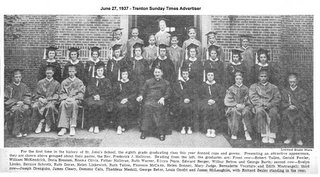
This is the graduating class of 1937 from St. John's School. The school closed recently. It became a victim of declining enrollment and the resulting financial problems caused in part by the seperation of church and state. The Trenton community lost a school which was noted for scholastic excellence.
1935: Cook School Safety Patrol

Here they are, the members of Wilbur's Cook School safety patrol.
The caption say is all: "They Guard the Safety of Cook School Pupils."
1896 Trenton Schools in Great Shape!

The Trenton schools in the latter part of the 19th century were kept in excellent condition by a cadre of very competent workers.
1901: A FIRING RANGE FOR TRENTON'S FINEST
I manually transcribed this article back in the 1970's. With the arrival of the new century, Chief Hiner was anticipating a growing city of Trenton, and with that growth, the need to re-shape and sharpen his force.
CHIEF HINER RECOMMENDS A SHOOTING RANGE
AUGUST 11, 1901, DAILY TRUE AMERICAN
Chief Hiner recommended the erection of signal lights throughout the city that can be readily seen by the police officers on their posts, thus bringing them into quicker communication with their respective districts. The recent escapade a young patrol officer had with a burglar when he emptied his revolver at the thief without a shot taking effect has prompted Chief Hiner to ask for the erection of a shooting range. The new men on the force have practically had no experience in handling weapons, and the installation of a revolver range would no doubt prove a big benefit to the department. Hiner's report showed the addition of 12 men to the force during the year, as the result of the annexed territory. During the year, 3,036 persons were arrested, against 2,334 for the previous year;
AUGUST 11, 1901, DAILY TRUE AMERICAN
Chief Hiner recommended the erection of signal lights throughout the city that can be readily seen by the police officers on their posts, thus bringing them into quicker communication with their respective districts. The recent escapade a young patrol officer had with a burglar when he emptied his revolver at the thief without a shot taking effect has prompted Chief Hiner to ask for the erection of a shooting range. The new men on the force have practically had no experience in handling weapons, and the installation of a revolver range would no doubt prove a big benefit to the department. Hiner's report showed the addition of 12 men to the force during the year, as the result of the annexed territory. During the year, 3,036 persons were arrested, against 2,334 for the previous year;
an increase of 702.
Although the number of arrests has increased, the records show a decided falling off in the number of serious offenses. Chief Hiner says there is very little gambling going on in the city. Poker is played somewhat, but after an investigation, the department found that it is powerless to prevent it. The installation of an automobile wagon would greatly lessen the expense now attached to the patrol service. It could be used by mounted police in patrolling the suburban districts. The large amount of new territory which has recently been annexed to the city is extremely difficult for the men to patrol on foot, and it will be not at all surprising if the board decides to station mounted police in these outlying sections.
Although the number of arrests has increased, the records show a decided falling off in the number of serious offenses. Chief Hiner says there is very little gambling going on in the city. Poker is played somewhat, but after an investigation, the department found that it is powerless to prevent it. The installation of an automobile wagon would greatly lessen the expense now attached to the patrol service. It could be used by mounted police in patrolling the suburban districts. The large amount of new territory which has recently been annexed to the city is extremely difficult for the men to patrol on foot, and it will be not at all surprising if the board decides to station mounted police in these outlying sections.
1938: Trenton Times
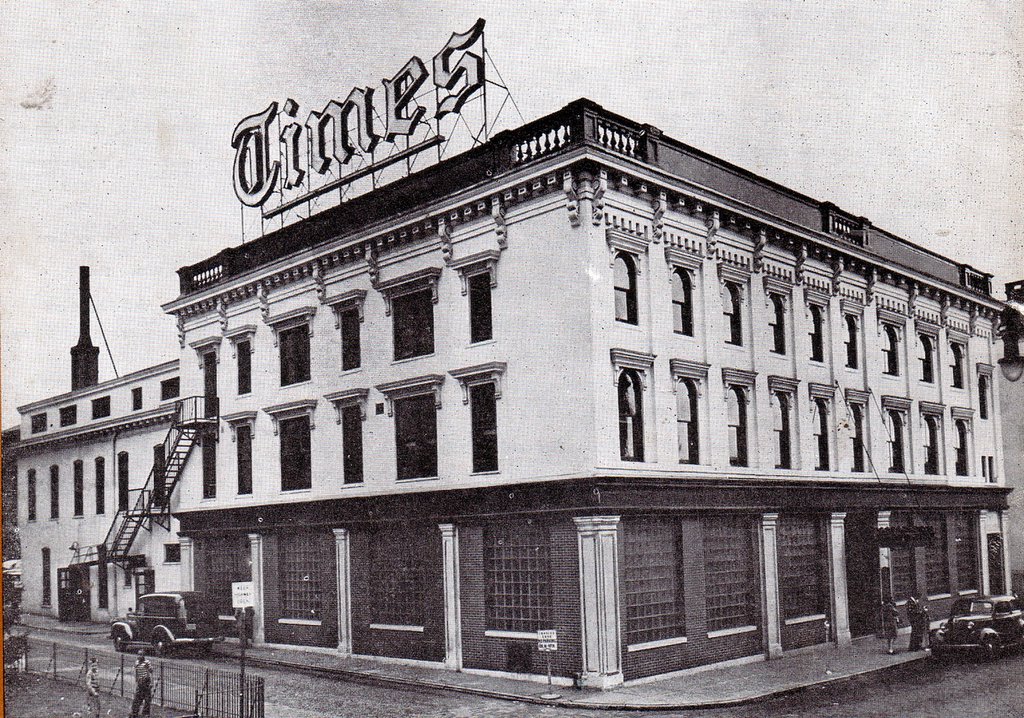
That venerable old newpaper has been around for many years. Many of the photos and articles published on "Tom Glover's Hamilton" came from back issues. This photo shows the Times building when the paper was located on Stockton Street in downtown Trenton.
Thursday, January 26, 2006
1872: The Genesis of the Hamilton Avenue Methodist Church

The stately and architecturally beautiful church still stands on the corner of Hamilton Avenue and Hudson Street.
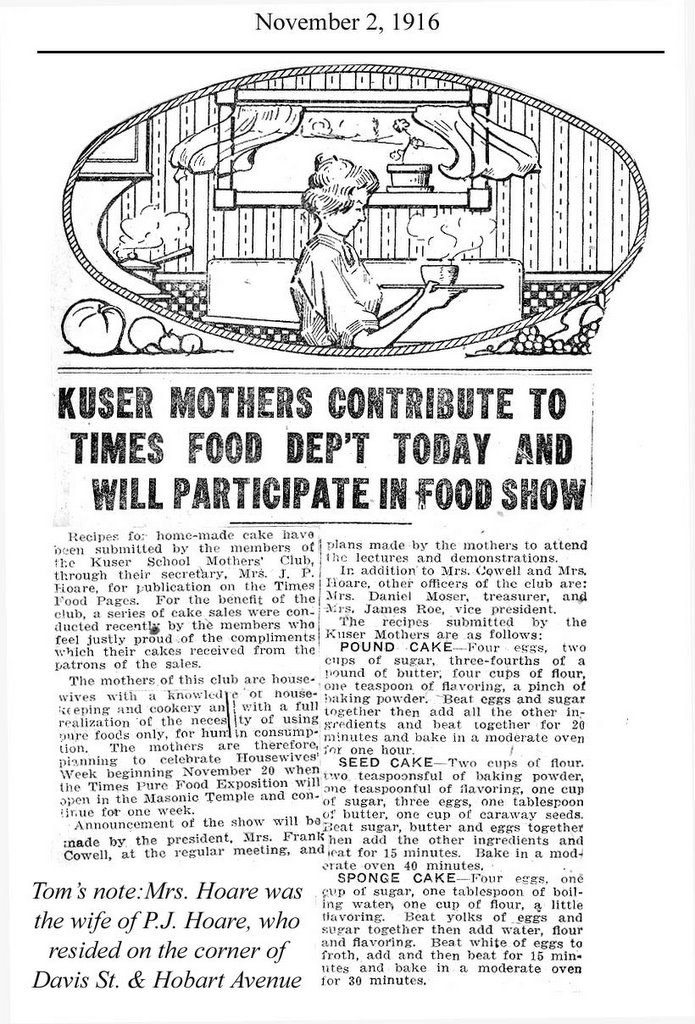
1909: Burglary at Lutze Jewelers
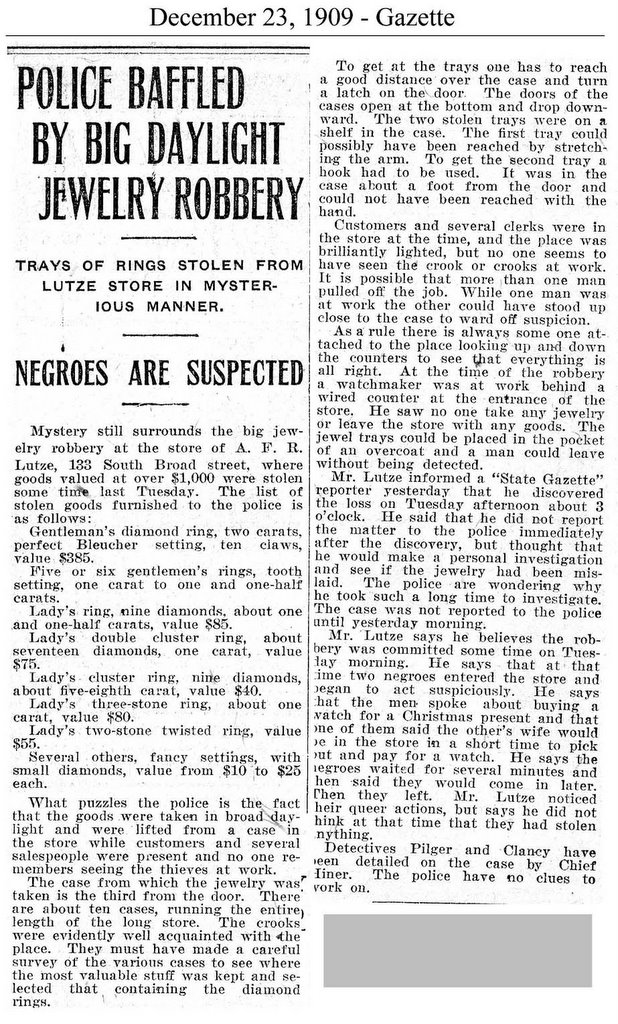 Crime was alive and well in Mercer County as this clip from 1909 shows.
1898 Looking Back to the Trenton of 1848
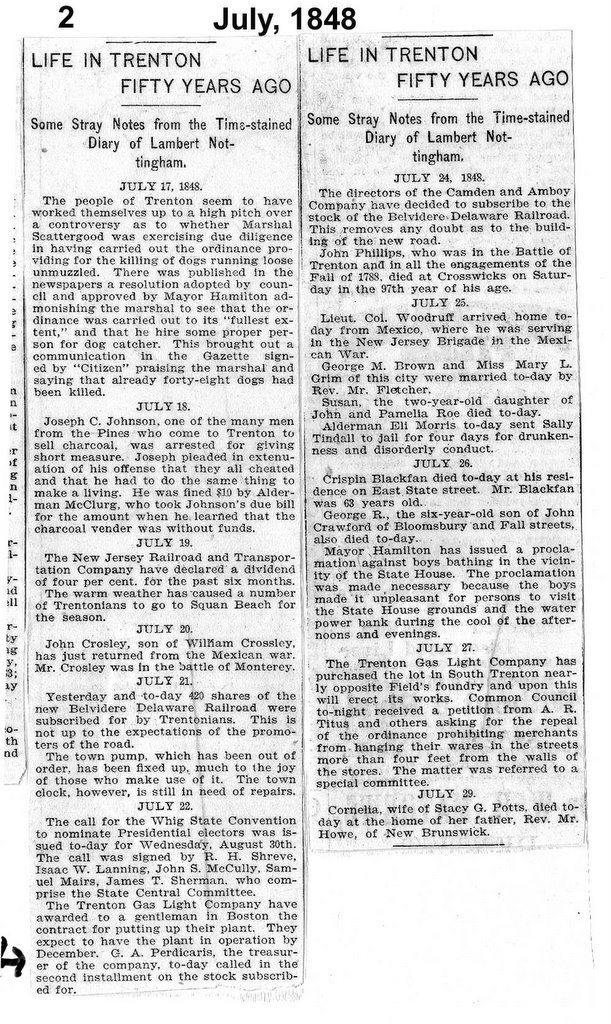 This is one in a series of numerous looks back at the city as it appeared during the mid 1800's. There will be additional clips of this type in future posts.
1935: Rider vs Trenton State
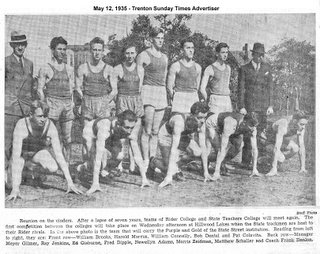 Back then, it was Rider College, and Trenton State Teachers' College. The rivalry was an classic confrontation.
1935: Jewish Women Donate Flag
 These ladies took the time to recognize the good works of the Boy Scouts of Ameria, and presented a flag to their leader.
Wednesday, January 25, 2006
Stockton Street as it was
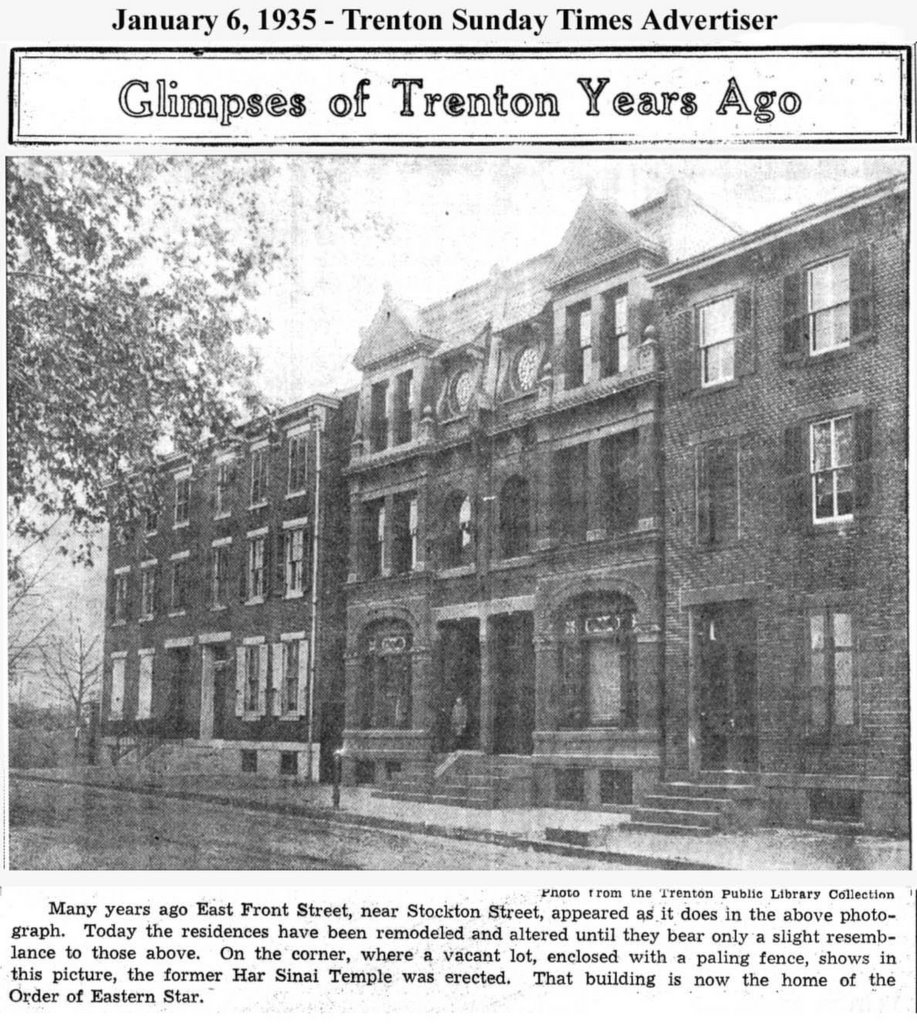 The Trenton Sunday Times Advertiser published "Glimpses of Trenton Years Ago" every week in the paper. It provided a graphic treasure for 21st century perusal. Some of the photos came from the extensive collection of the Trenton Public Library's "Trentoniana" collection.
1910: Beatty Street Before Paving
 Can you imagine Beatty Street being a dirt road? Well it was back in 1910 as this photo graphically illustrates.
1909: St. Joachim Presents an Opera
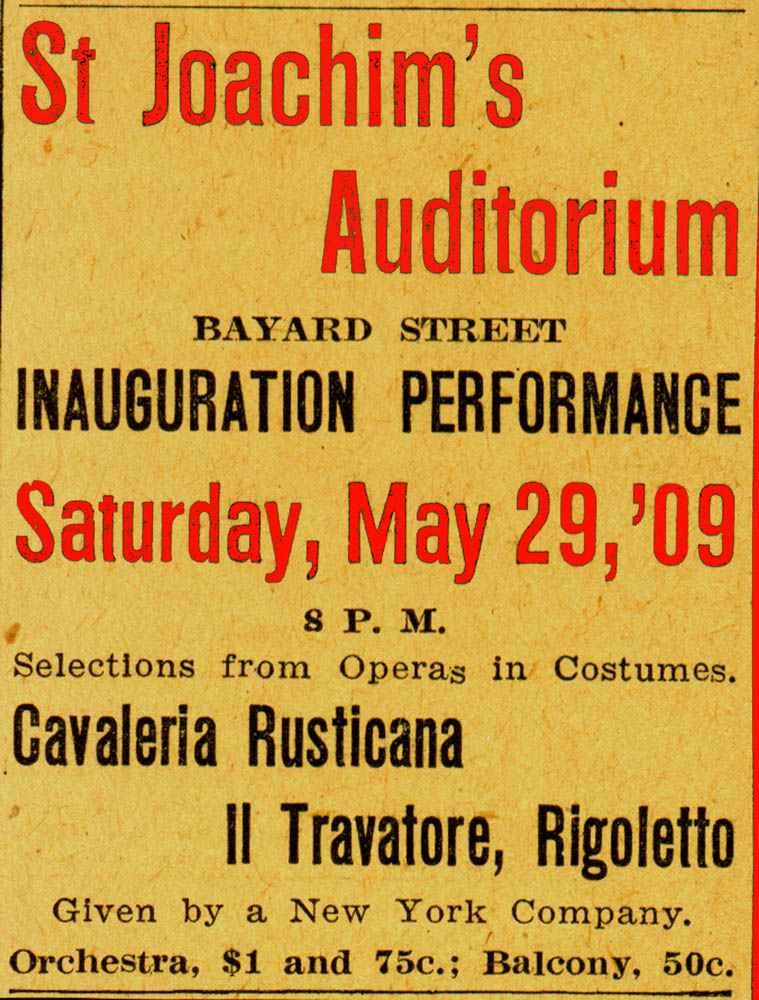 Citizens of American-Italian descent should be very proud of the musical heritage of Italy. The "broadside" shown in this graphic was originally a small black and white ad in the "Daily State Gazette" of May, 1909. With a bit of touching up, it is transformed into an interesting bit of history. In the early part of the 20th century, St. Joachim's Church on Bayard Street was a refreshing retreat for the newcomers to America. Mass on Sunday, and the spacious auditorium for their many community events.
1931: Digital Readout? Well, It's a Start!
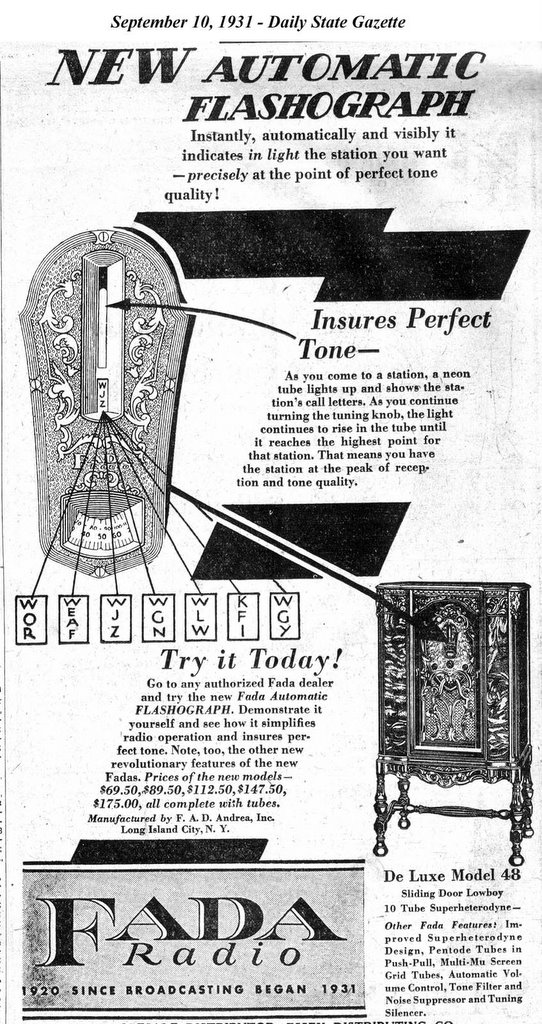
Vintage radio ads have always fascinated me. This "Fada" ad touts the new "Automatic Flashograph" which assisted the owner to zero in on the exact frequency, guided by a neon light indicator. My family had a radio with a round green indicator with a black "pupil" in the center. As you moved away frotuned it to the desired frequency, two vertical lines converged.
Monday, January 23, 2006
FOR YOUR INFORMATION
DON'T FORGET TO GO TO THE ARCHIVES. AT THE PRESENT TIME, NOVEMBER AND DECEMBER ARE LOGGED. YOU WILL FIND THEM ON THE RIGHT SIDE OF THIS SITE.
Should you want to contact me, my e-mail address is thomglo@verizon.net
1933 Hamilton Square School Commencement
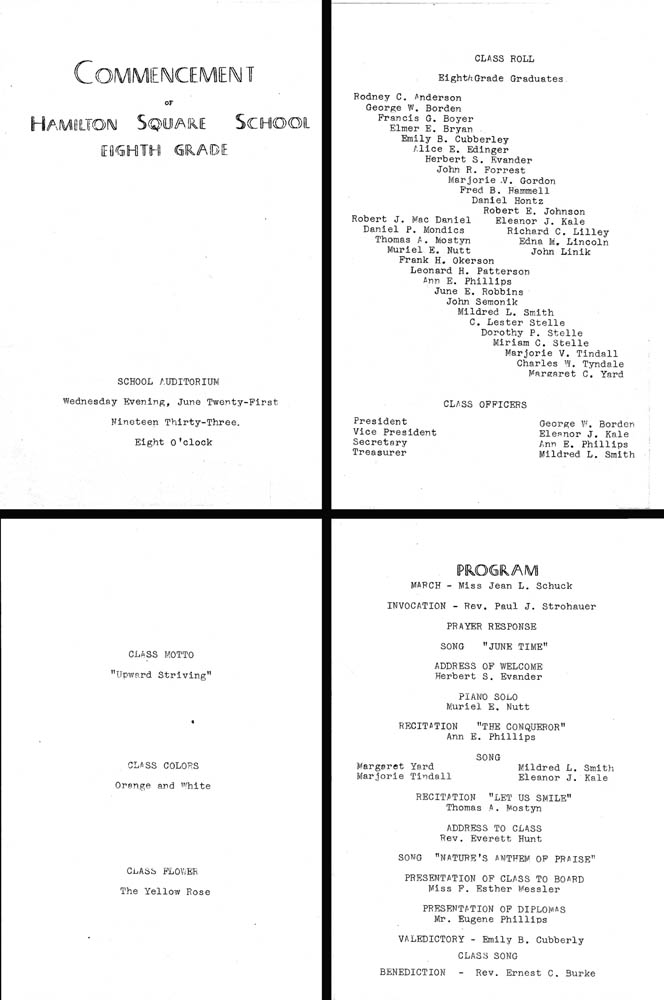
This is the quartered and segmented scanned program of the Commencement exercises of the Hamilton Square Grammar School's Class of 1933.
1915 Mercerville School
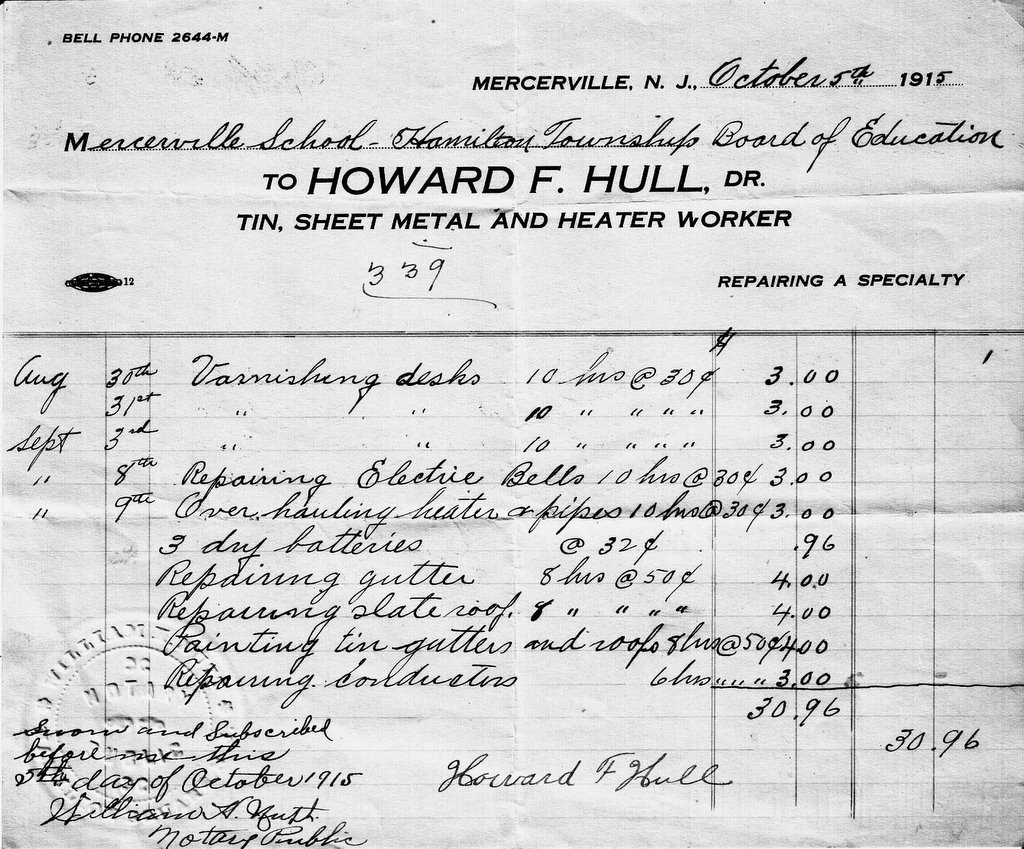
Would you believe that this, and many other historic documents were destined to be recycled? Thankfully, there are some enlightened citizens who are not "historically challenged," and saw that there was a redeeming value for "trash" of this type. All will agree that by today's standards, the Mercerville School got their money's worth from Mr. Hull's labors. Thirty cents per hour for varnishing desks! Where is his union steward?
1950's; Hamilton Avenue Greenhouses
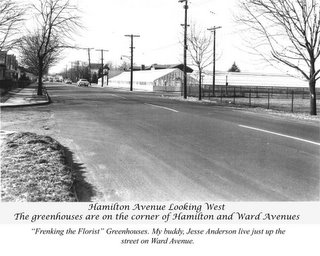 The photo indicates that the greenhouses were those of Frenking, the Florist. I have since found that this is not the case. The photo indicating it as the home of "Frenking the Florist" is in error.
This photo brings back many, many memories of my teen years. Down the street was the home of my childhood buddy, Jesse Anderson who lived in a little cottage on Ward Avenue. Carl DeAngelo's Del Rio was also in the neighborhood, and Carl had a huge round oak table reserved for me and my buddies where he dubbed us the "Knights of the Round Table." We met there nearly every night after taking our dates home.
Camp Olden Area Develops
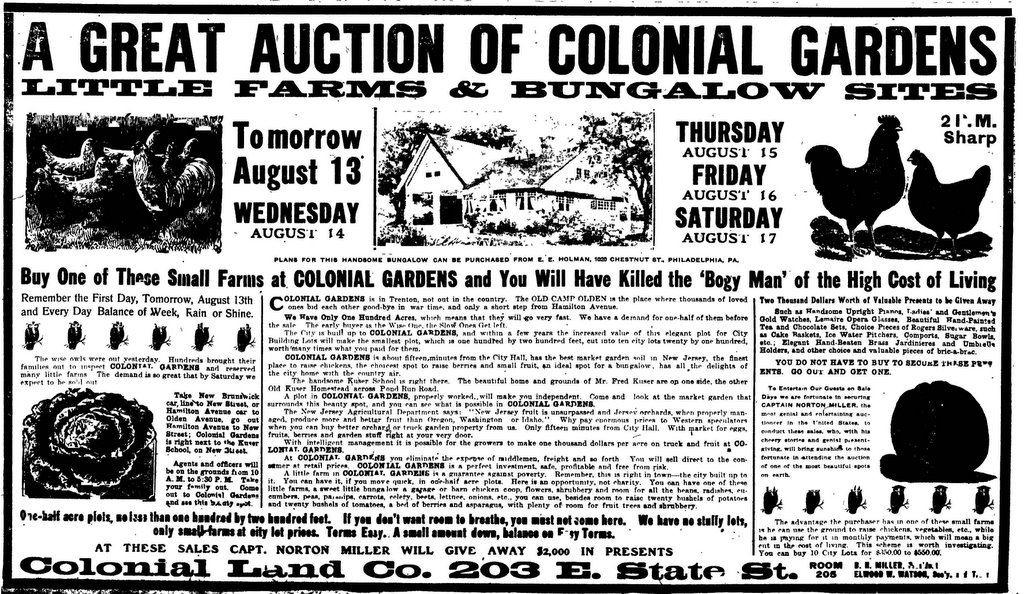
Can this ad for real estate in the Newkirk-Liberty-Hamilton-Kuser area harbor shed a bit more light on the boundary of the Civil War Camp Olden?
1909: Hopewell - Ewing Vigilant Society
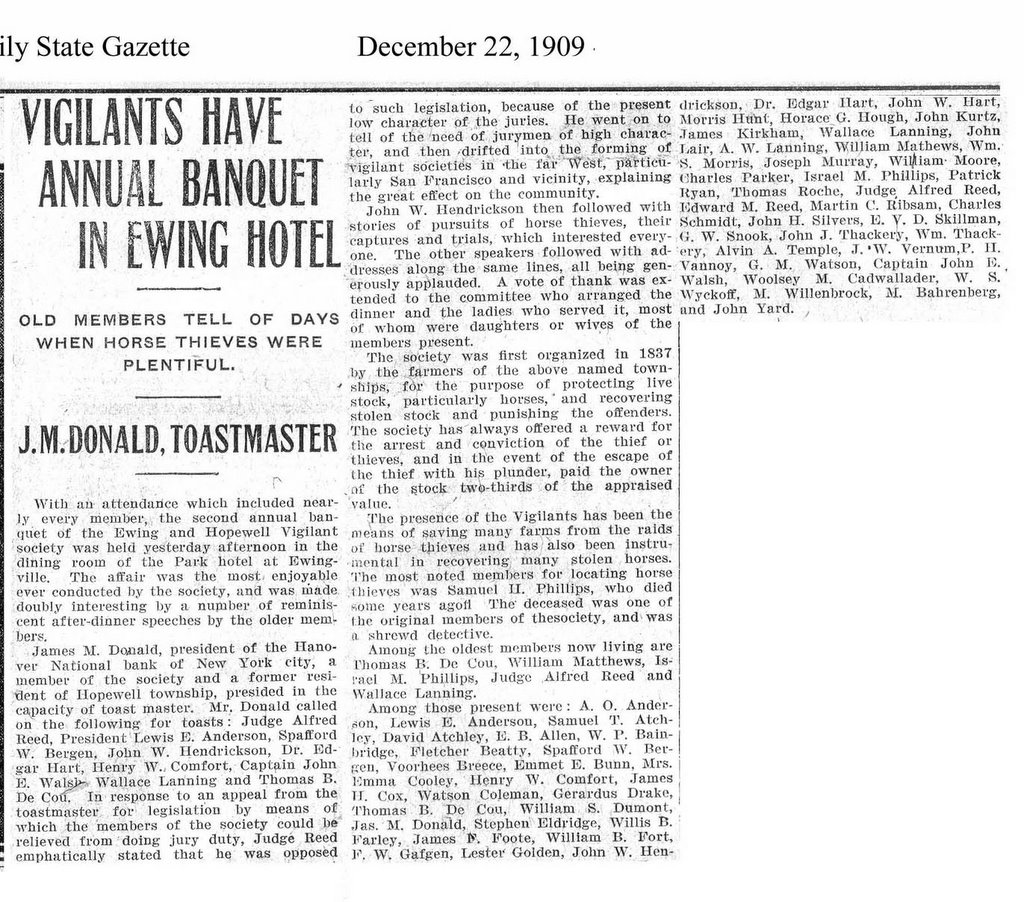
How great is this? A society of farmers who chase after the bad guys and turn them in for prosecution.
1909: The Formation of the Mercer Auto Co.
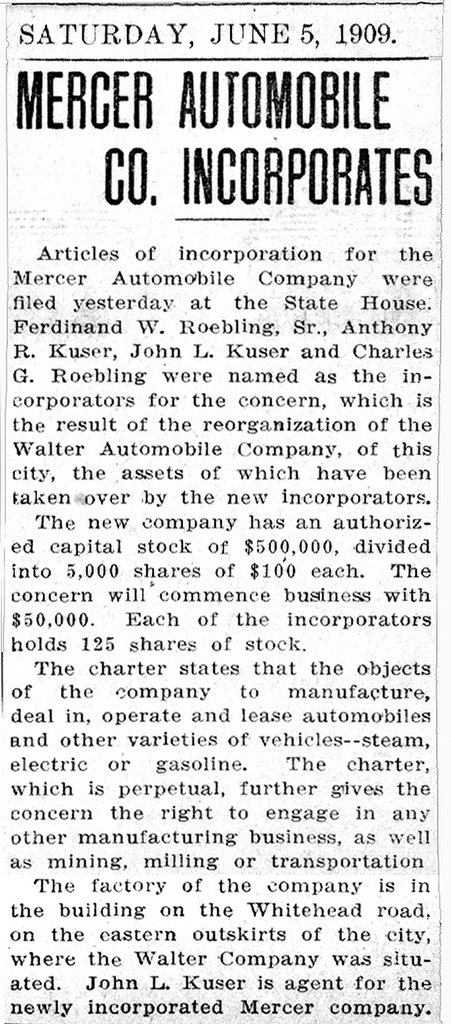
Hamilton Township's internationally famous Mercer Automobile Company was incorporated in 1909.
The Mercer, along with another Trenton area auto, William Sharp's "Sharp Arrow," made many racing headlines in the early part of the 20th century.
1919 The Consummate Airliner
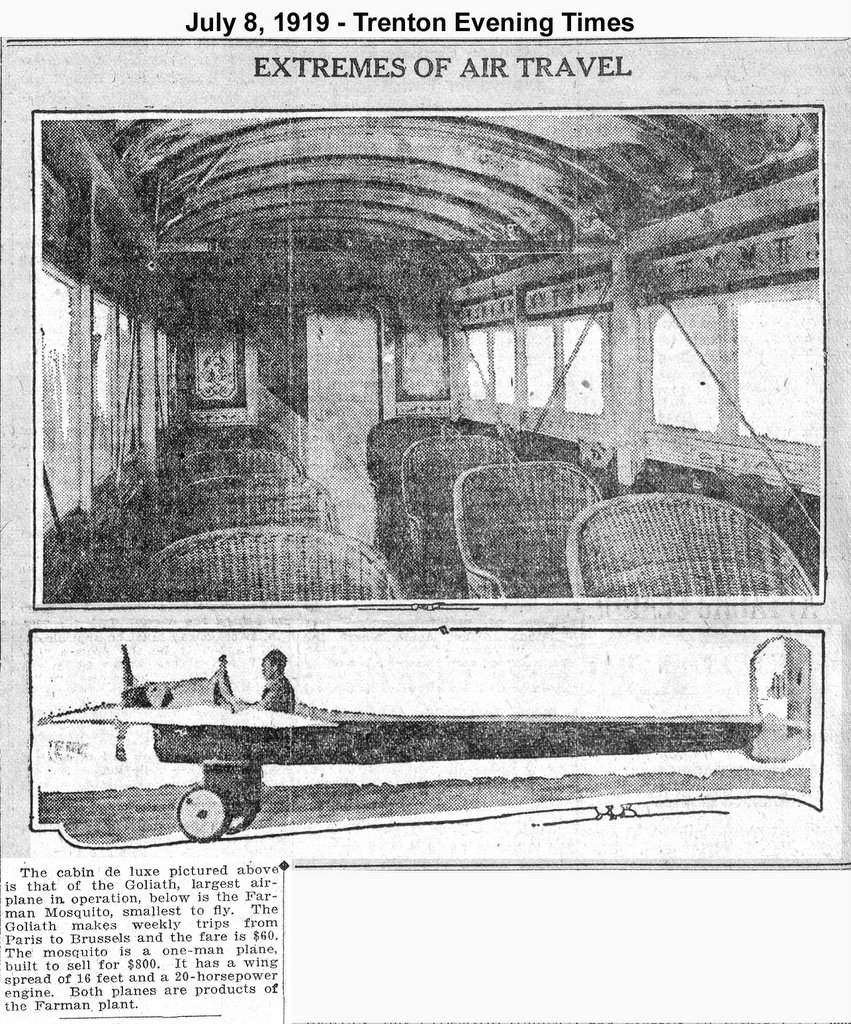
Here's a 1919 state of the art passenger type "aeroplane" replete with Wicker seats, and other very limited passenger conveniences. It was a giant forward step in aircraft size back then, as was the small single place aircraft in the photo below.
Sunday, January 22, 2006
Another Great Old Trenton Company

Wyckoff & Son were very popular carriage makers in the Trenton of yesteryear. One of the vehicles shown in the photo was fabricated for Fitzgibbon & Crisp.
Bethel Lutheran Church 90 Years Old
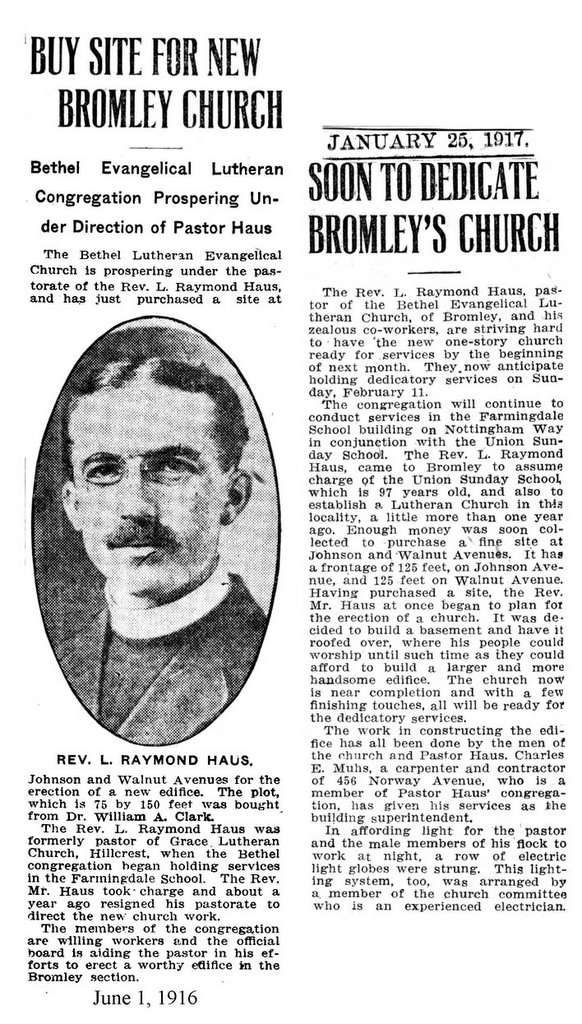
Articles such as this is what makes the local history project worthwhile. That venerable old church on Johnston Avenue in Hamilton will celebrate 100 years in Hamilton in 1917. The real estate, as seen in the article, was sought in 1916. In this year of 2006, Rev. Haus' Bethel is still a valued community asset.
1934 EXQUISITE VIEW!
 This photo of center city Trenton as it appeared in 1934 is a true treasure. Old time Trenton area residents will recognize the theater marquees on both sides of East State St.
 Kuser School in the 1940's
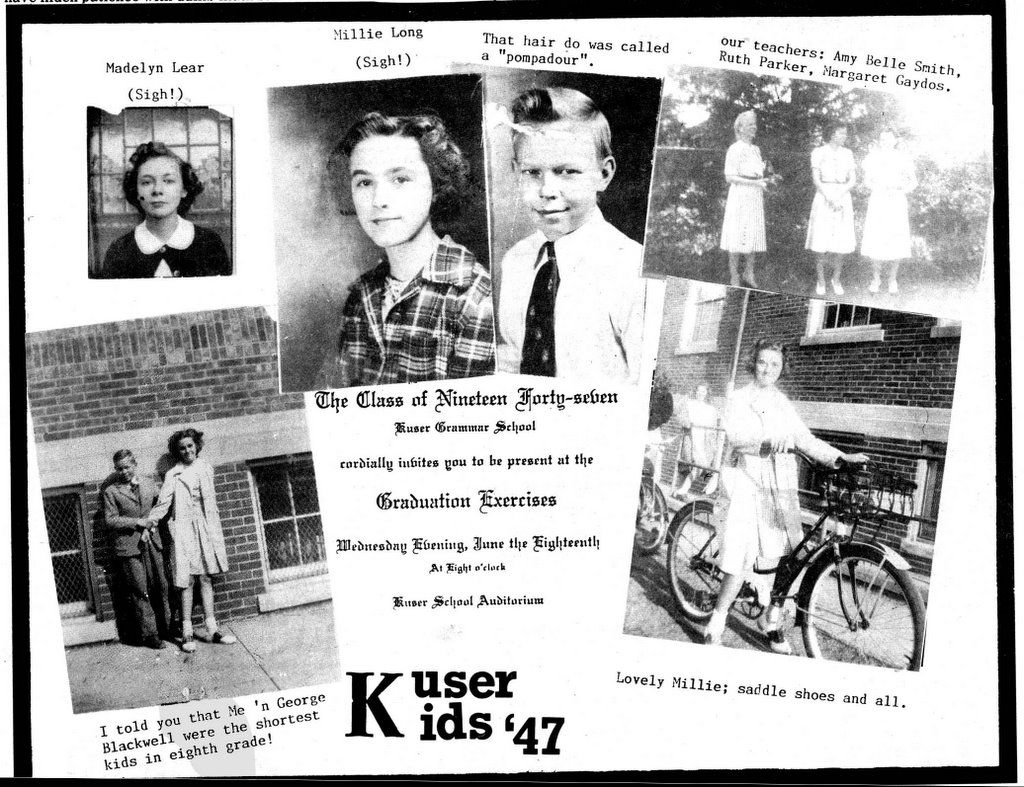
Long, long before I met the love of my life to whom I have been married for 51 years, there were "other women" (little girls?) in my life. Let's see, the very first was Mary Lou, then Shirley, then Mary Ann, then.......The little fella with the Mel Torme pompadour hair do is yours truly, surrounded by my grammar school crushes. The lower left photo explains why it was so difficult for me to dance with the girls. Most of them were taller than I! Ahh, those dear old golden rule days just keep coming back like a song.
Save, Enlarge, and Sign My Guestbook!
PLEASE SIGN MY GUEST BOOK AT THE BOTTOM OF THE PAGE (ANONYMOUSLY OR OTHERWISE)
Saving and enlarging the graphics on this site:
To save: RIGHT CLICK on the graphic. Click
To save: RIGHT CLICK on the graphic. Click
SAVE TARGET AS and choose a spot on your hard drive.
To enlarge a graphic that allows for enlarging:
Click on the graphic. It will enlarge. After first enlargement, if still another enlargement is possible, look for an orange and blue icon on the LOWER RIGHT corner of the graphic. If one appears, click on it for maximum enlargement.
To enlarge a graphic that allows for enlarging:
Click on the graphic. It will enlarge. After first enlargement, if still another enlargement is possible, look for an orange and blue icon on the LOWER RIGHT corner of the graphic. If one appears, click on it for maximum enlargement.
NOTE: Depending on the size of the file, there are occasions when the orange and blue icon does not appear immediately. Wait a second or two with your cursor arrow on the lower right of the photo; sometimes it takes a bit of time until the icon appears.
Ewing's Eastern Aircraft

During World War II, I remember with with remarkable clarity the daily flights over my Hartley Avenue home. They flew so low, one could see the pilot in the cockpit as he flew over our house testing a brand spanking new Grumman "Avenger" from the assembly line at the Parkway Avenue facility.
Do you Remember the TRENTON GIANTS?
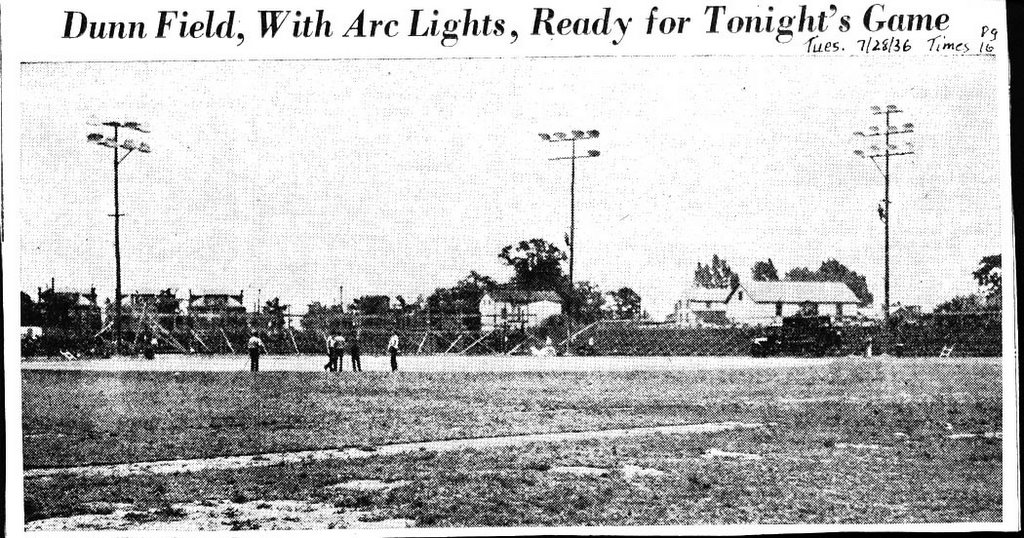
Many old timers remember going to Dunn Field, on the Brunswick Circle to watch the Trenton Giants play their opposing teams in the old Class "B" Interstate League.. Let's see, they played against the Harrisburg Senators, Sunbury Reds, Lancaster Red Roses, York White Roses, and the team's perennial nemisis, the Wilmington Blue Rocks. Who rembembers Maurice "Mo" Cunningham, Pete Pavlik, Don Robertson, Ray Kaat, and "Say hey" Willie Mays.
Saturday, January 21, 2006
1944 Klockner School Keystone Safety Patrol

One of the things that makes Hamilton such a great place to live lies in the "small town" heritage it has for those of us senior citizens who have spent our lifetimes as residents. The above photo shows the safety patrol from Klockner School. Eddie Layton, in the lower center of the photo was the son of Mr. Joe Layton, who had the contract for providing the school buses for then rural Hamilton. Eddie and his father drove the buses. Eddie's sister, Dorothy Layton Fracella, was a classmate of mine in the Hamilton High School class of 1951. SMALLER AND RURAL WAS BETTER!
1941: My Mother, the rural Hamiltonian

This is a personal family photo of my mother during the dark days of World War II feeding the chickens in our yard at 131 Hartley Avenue. Today, those yards have morphed into lush green lawns. Back in the 30's and 40's nearly every home in our suburban neighborhood had chicken coops, and a vegetable garden.
Lalor School Class of 1937 - 1938
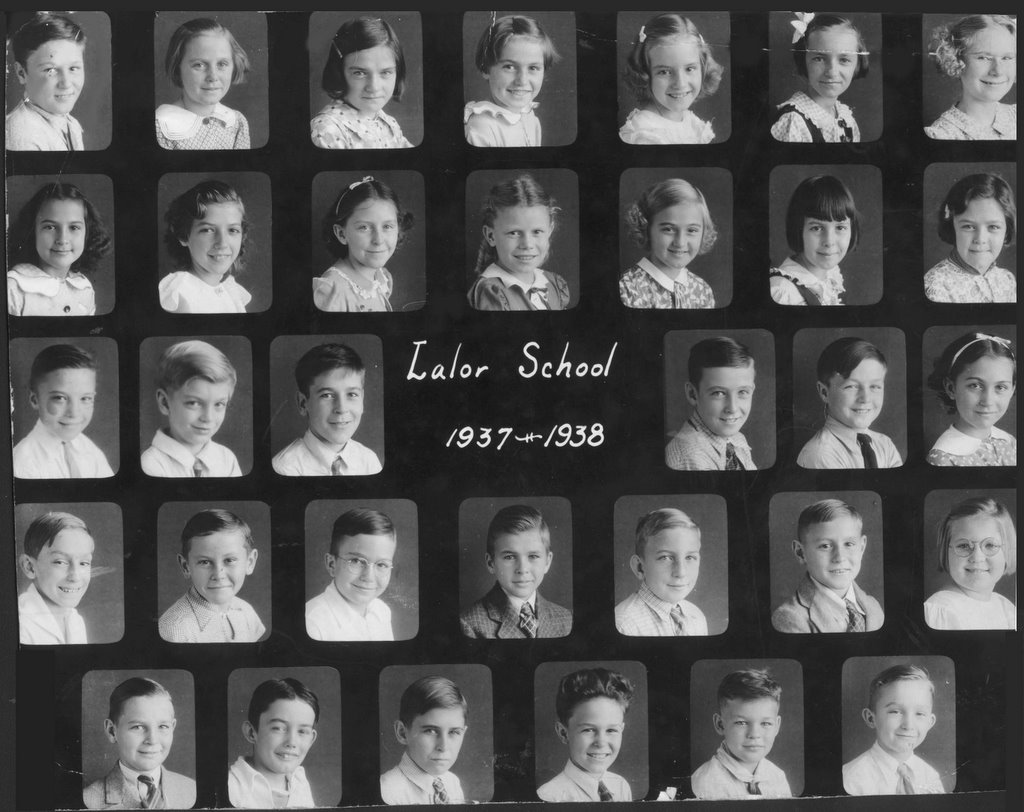
Here's a class photo of the class of 1937-1938. Perhaps you were in that class or know someone who was. If you do, and if he or she has an email address, you can send this photo to them. Look on the bottom of this text and find the icon for an envelope. Click on it, fill in the blanks, and voila! Instant Email.
Friday, January 20, 2006
Pennington's William P.Howe, Jr.
 I met this gentleman many years ago when my buddy Don Slabicki and I worked for Fred and Edna Kuser. Bill Howe was Edna Howe Kuser's brother. We met him long after his World War I army service. Indeed, when we met him he was a big game hunter. I recall his stories of going on safaris in Africa. His father, William P. Howe Senior was the former Mayor of Pennington. As I recall, the Mayor was a native of Tennesse before settling in Pennington at "The Birches." The Howe's had a very busy nursery in Pennington and Hamilton back in the 30's and 40's.
Pearson Burial Ground

One of the most fascinating and historic places in Hamilton is to be found over on South Broad Street adjoining the Colonial Cemetery.
1906 HAMILTON'S "POOR FARM"

1913: Jewish Community Protest Stereotyping
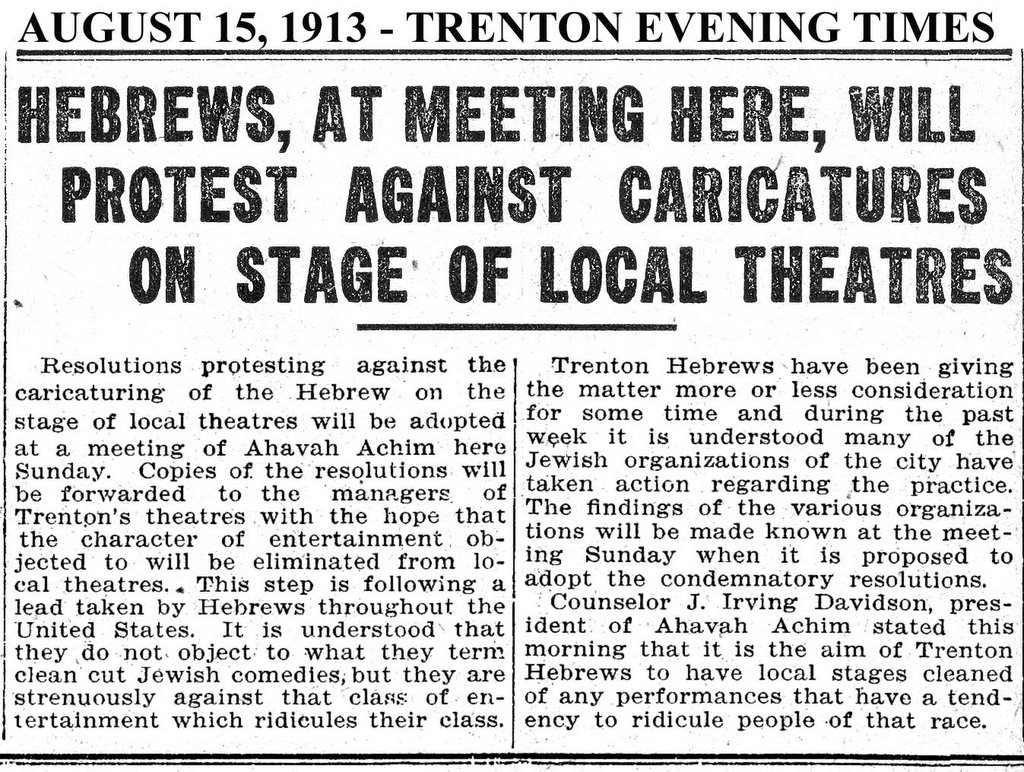
One thing that stands out in clear focus as I peruse the millions of pages in our local newspapers, is the rampant racism which existed in our own community back in the late 19th century and continuing well into the 20th century. Italians, Irish, African American, and Jewish immigrants, as well as numerous others in our community, and communities all over America were victims of very degrading public ridicule. Aparently if you weren't a white Anglo Saxon Protestant, you were fair game..
1936: TRUE YESTERDAY, MORESO TODAY!
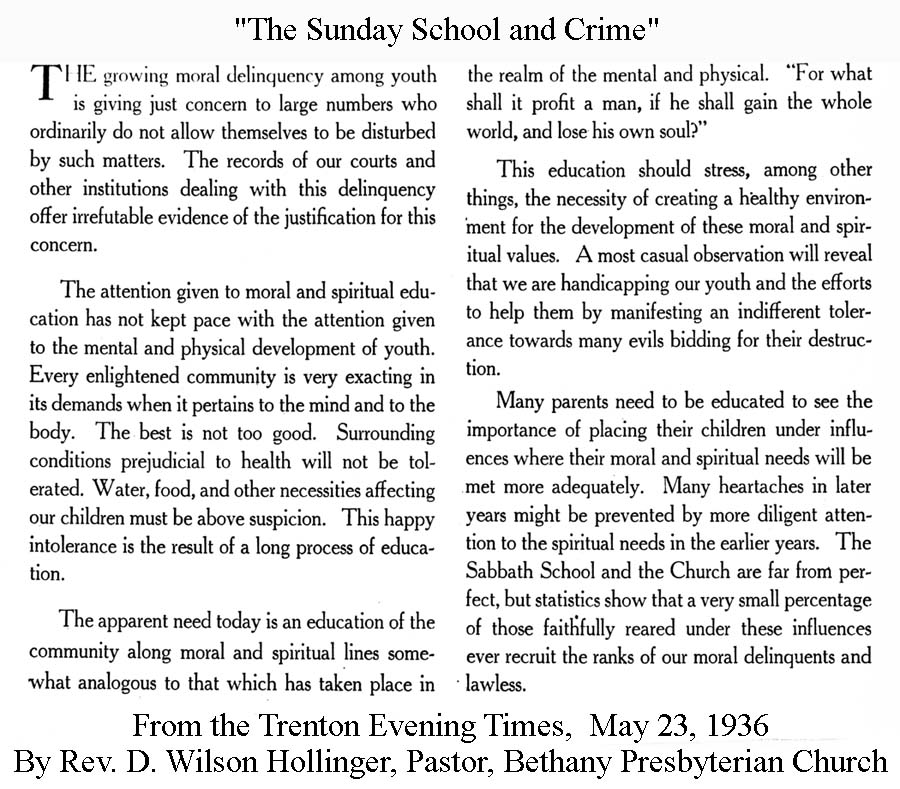
Each week back in 1936, the Trenton Evening Times published public service announcements which concentrated on the growing problem of juvenile delinquency. Viewed in retrospect, one must wonder where we went wrong.
1947 KUSER SCHOOL BASEBALL TEAM
 Some of my favorite library subjects are class pictures from the pre-1960 era, and photos such as this, showing the Kuser baseball team. Years from now, relatives and friends will find these photos of great interest; especially those who are interested in genelogy.
REMEMBER: TO ENLARGE, LOOK FOR THE ORANGE AND BLUE ICON WHICH WILL APPEAR ON THE LOWER RIGHT OF THE IMAGE.
John Abbott II House
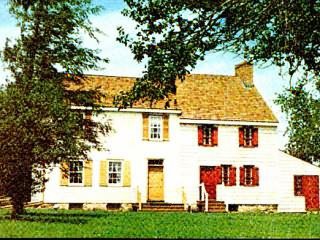
A future entry on this site will include a more detailed story of the John Abbott II house, home of the Historical Society of Hamilton Township. Currently, (2006) the society is led by president Dr. James Federici. The Society meets the first Monday of every month from March through June, and September through December. Meetings are held in the Hamilton Township Public Library. If you are interested in the fascinating history of Hamilton and would like to join us, send me an email at thomglo@verizon.net and I will contact you.
1909 Hamilton Fire Company Formed

As a Bromley resident for 42 years or so, it is fitting that I include the accompanying article on the genesis of the volunteer fire company with their slate gray fire trucks on my website. In 3 more years, that venerable engine company will celebrate a centennial anniversary.
Class of 1943 - Holy Angels Grammar School

Do you know anyone in this class photo of the Holy Angels Gramar School class of 1943? Oh to return to the years when the school boys wore neckties and the girls wore dresses!
Thursday, January 19, 2006
Yardville School, Circa 1910

This old photo shows the Yardville Grammar School as it looked early in the 20th century.
The building still stands on Route 156 and is an apartment complex. The building on the right is the Order of United American Mechanics (OUAM) building.
(Note: You will note there are "herringbone" type lines throughout the photo. This is "malady" is more severe in certain photos produced in the offset printing process.)
Wednesday, January 18, 2006
Yardley Beers, Delaware Valley Radio Association
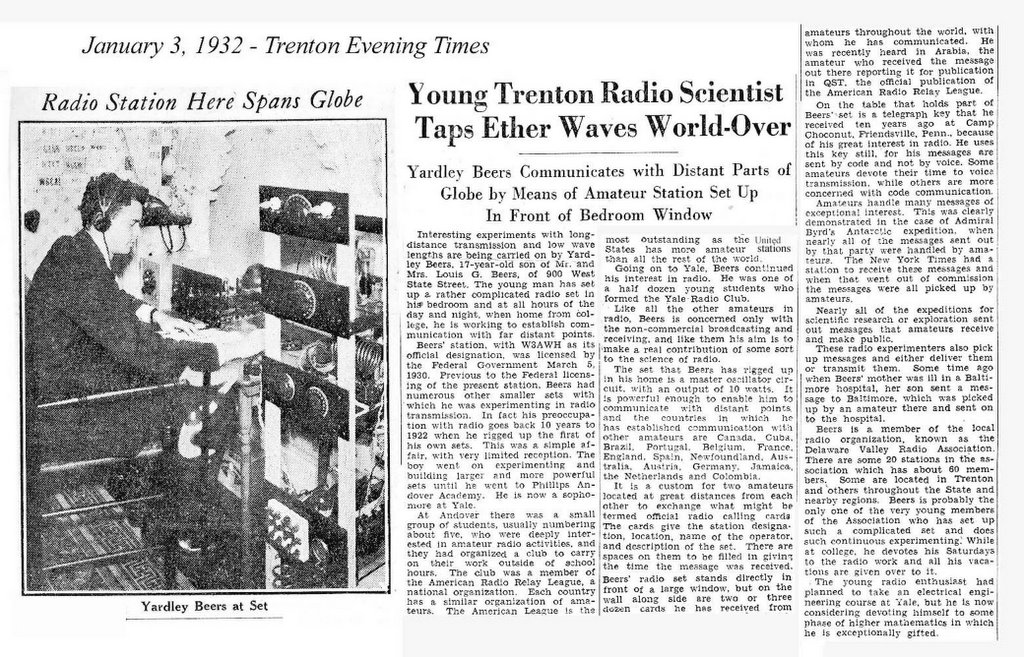

This 1932 photo reports on the amateur radio activities of DVRA pioneer Yardley Beers. Mr. Beers is seated in his shack, with a communications console loaded with what we amateurs today consider to be "boat anchors" due to their large size and heavy weight. Today's amateur radio equipment is solid state technology and miniscule in size when compared with Mr. Beers' "shack" as shown in the photo.
If you are an amateur radio "wannabe, " or just interested in short wave listening ("SWL-ing"), you can contact the Delaware Valley Radio Association (DVRA) at www.w2zq.com. The club headquarters is in Ewing township at the Bear Tavern Road exit of route 95.
Hamilton Early Schools; a mini-history
"HAMILTON TOWNSHIP SCHOOLS - THE WAY THEY WERE"
Compiled and edited by Tom Glover
Compiled and edited by Tom Glover
Public education has played a vital role in the evolution of America. From very modest beginnings in the days of the Pilgrims, right up to the present day, Americans have always placed a high priority on the "3 R's".
This humble treatise deals with Hamilton Township schools of the past. Indeed, some of the schools from way back in the 1890's will be heard from. The source material has been transcribed from old newspaper clippings, unfortunately some of it undated. Intriguing Hamilton Township school names such as Edgebrook, Washington, and Friendship were all a part of Hamilton Township’s primary education system. The names of prominent Hamiltonians such as E. S. Willey, General James Rusling, Benedict C. Kuser, Isaac De Cou, and countless others, will play an important part in this thumbnail history of Hamilton's system of education.
In the latter part of the 1800's, Hamilton Township was mostly farmland; about as rural as you could find in the area. As the 20th century dawned, Hamilton and the surrounding area would progress from a system of one room school houses, into the highly efficient and sophisticated system that we know today.
Those of us who are avid fans of "The Little Rascals" on TV, are quite familiar with the one room school house. The kids were taught by a winsome and lovely teacher named Miss Crabtree. It is somewhat difficult to comprehend that Hamilton had those very same one room school houses, but we did.
So as Miss Julia McLain, my 6th grade teacher at Kuser School used to say, “face front, keep your eyes on your own paper.” You will see how rural, one room schoolhouses, scarlet fever epidemics, and other grade school crises, provide an interesting peek at our past.
GETTING ORGANIZED
Hamilton Township's first recorded school board meeting was held on July 13, 1894 at the school in Hamilton Square. At this meeting, the board voted to number the schools, and trustees were appointed for each school. The initial schools placed under the jurisdiction of the board, and their assigned numbers were:
No. 1) WASHINGTON
No. 2) MERCERVILLE
No. 3) HAMILTON SQUARE
No. 4) EDGEBROOK
No. 5) FRIENDSHIP
No. 6 ) WHITEHORSE
No. 7) YARDVILLE
No. 8) GROVEVILLE
No. 9) FARMINGDALE
The census of 1898 showed Hamilton with 981 school-age children. Of that number, 517 were formally enrolled in the township school system. Twenty five children attended private schools. The remaining 339 didn't attend school. In those days, it was not unusual for children to work on farms, or in factories. Truancy was an accepted fact, and a formal truancy program was yet to be implemented.
The "one-teacher-one-classroom" concept worked out quite well until the developers began to add to our population. Early real estate developments, such as the Homedell Land Association, Bromley Place, Broad Street Park Land Association, the Union Land Association (Deutzville), and other developers, were creating home sites, and many farms were changing into developed areas. As the various areas developed, the need for more and larger schools became apparent. It is interesting to note that some of Hamilton's schools have been in continuous operation since the early part of this century. The relatively recent renovation of two of these schools, Kuser and Klockner, is helping to maintain a link with the past.
MERCERVILLE SCHOOL
Before the township schools were organized under the board of education in 1894, Mercerville School was known as School No. 2. It was located on Quaker Bridge Road approximately where the Quaker Bridge Commons building is now located. During the period from 1894 to 1904, the school was taught by the Misses Annie Wright, Jennie Chinnick, Roxie Southard, Ella Polhemus, and a Miss Peabody.
One of Mercerville School’s teachers, Miss Roxie Southard, caused somewhat of a problem for the early school board; a problem which really wasn't handled too diplomatically. It seems that Miss Southard suspended the son of one of the members of the Hamilton Township Board of Education for disorderly conduct. Additionally, the boy was from one of the more prominent families of Hamilton Township. The touchy situation was resolved in a somewhat devious manner, when the board ruled that Miss Southard had suspended the boy for violation of her (Miss Roxie Southard’s) rules, as opposed to the rules of the school. It was further ruled that the boy could return to the school if he promised to adhere to the rules of the school. Throughout the early years and almost without exception, the board required an apology from all errant students. There was no such requirement in the Roxie Southard case. In May, 1900, she was sent to the Farmingdale School, trading places with Miss Jennie Chinnick.
Over the years, the Hamilton schools were rented to various organizations for after school use. Many complaints were heard by the board relative to the after hours tenants: The Groveville School was often left in disorder by the Groveville Cornet Band, who practiced in that school. The added cost of coal consumption at Mercerville School due to Mr. Theodore Carhart's Union Sunday school on Sunday Mornings. These and other problems were dealt with by the Hamilton Township Board of Education in the early part of the century. And then came the first problem of a major magnitude.
In March, 1903, a fire totally destroyed the Mercerville school. The cause was believed to have been from a faulty chimney. The fire caused a great problem for the local families who depended on the school to educate their children. The board took immediate steps to replace the building. The insurance coverage was $1,000, enough to cover more than half of the replacement cost of a new schoolhouse.
Mr. Riley, the trustee, was instructed to find someone to transport the children to the Hamilton Square School until the new building was completed. It was difficult to find anyone at first, but by the end of April Mr. Riley succeeded in hiring Howard Smith to transport the Mercerville children at a cost of $5.50 per week.
With $1,000 insurance money on hand, the board proceeded to appropriate $800 additional to rebuild the school. At the October meeting, bids were opened and Mr. Riley was deemed the successful bidder on a replacement school with a bid of $1,660.00. The contract was awarded to Mr. Riley with a $500 performance bond, and the understanding that the school would be finished by December 21, 1903. The one room schoolhouse became a thing of the past. Mercerville was moving into the era of the multi-room, multi-teacher school house.
INTERESTING SPLINTERS FROM
This humble treatise deals with Hamilton Township schools of the past. Indeed, some of the schools from way back in the 1890's will be heard from. The source material has been transcribed from old newspaper clippings, unfortunately some of it undated. Intriguing Hamilton Township school names such as Edgebrook, Washington, and Friendship were all a part of Hamilton Township’s primary education system. The names of prominent Hamiltonians such as E. S. Willey, General James Rusling, Benedict C. Kuser, Isaac De Cou, and countless others, will play an important part in this thumbnail history of Hamilton's system of education.
In the latter part of the 1800's, Hamilton Township was mostly farmland; about as rural as you could find in the area. As the 20th century dawned, Hamilton and the surrounding area would progress from a system of one room school houses, into the highly efficient and sophisticated system that we know today.
Those of us who are avid fans of "The Little Rascals" on TV, are quite familiar with the one room school house. The kids were taught by a winsome and lovely teacher named Miss Crabtree. It is somewhat difficult to comprehend that Hamilton had those very same one room school houses, but we did.
So as Miss Julia McLain, my 6th grade teacher at Kuser School used to say, “face front, keep your eyes on your own paper.” You will see how rural, one room schoolhouses, scarlet fever epidemics, and other grade school crises, provide an interesting peek at our past.
GETTING ORGANIZED
Hamilton Township's first recorded school board meeting was held on July 13, 1894 at the school in Hamilton Square. At this meeting, the board voted to number the schools, and trustees were appointed for each school. The initial schools placed under the jurisdiction of the board, and their assigned numbers were:
No. 1) WASHINGTON
No. 2) MERCERVILLE
No. 3) HAMILTON SQUARE
No. 4) EDGEBROOK
No. 5) FRIENDSHIP
No. 6 ) WHITEHORSE
No. 7) YARDVILLE
No. 8) GROVEVILLE
No. 9) FARMINGDALE
The census of 1898 showed Hamilton with 981 school-age children. Of that number, 517 were formally enrolled in the township school system. Twenty five children attended private schools. The remaining 339 didn't attend school. In those days, it was not unusual for children to work on farms, or in factories. Truancy was an accepted fact, and a formal truancy program was yet to be implemented.
The "one-teacher-one-classroom" concept worked out quite well until the developers began to add to our population. Early real estate developments, such as the Homedell Land Association, Bromley Place, Broad Street Park Land Association, the Union Land Association (Deutzville), and other developers, were creating home sites, and many farms were changing into developed areas. As the various areas developed, the need for more and larger schools became apparent. It is interesting to note that some of Hamilton's schools have been in continuous operation since the early part of this century. The relatively recent renovation of two of these schools, Kuser and Klockner, is helping to maintain a link with the past.
MERCERVILLE SCHOOL
Before the township schools were organized under the board of education in 1894, Mercerville School was known as School No. 2. It was located on Quaker Bridge Road approximately where the Quaker Bridge Commons building is now located. During the period from 1894 to 1904, the school was taught by the Misses Annie Wright, Jennie Chinnick, Roxie Southard, Ella Polhemus, and a Miss Peabody.
One of Mercerville School’s teachers, Miss Roxie Southard, caused somewhat of a problem for the early school board; a problem which really wasn't handled too diplomatically. It seems that Miss Southard suspended the son of one of the members of the Hamilton Township Board of Education for disorderly conduct. Additionally, the boy was from one of the more prominent families of Hamilton Township. The touchy situation was resolved in a somewhat devious manner, when the board ruled that Miss Southard had suspended the boy for violation of her (Miss Roxie Southard’s) rules, as opposed to the rules of the school. It was further ruled that the boy could return to the school if he promised to adhere to the rules of the school. Throughout the early years and almost without exception, the board required an apology from all errant students. There was no such requirement in the Roxie Southard case. In May, 1900, she was sent to the Farmingdale School, trading places with Miss Jennie Chinnick.
Over the years, the Hamilton schools were rented to various organizations for after school use. Many complaints were heard by the board relative to the after hours tenants: The Groveville School was often left in disorder by the Groveville Cornet Band, who practiced in that school. The added cost of coal consumption at Mercerville School due to Mr. Theodore Carhart's Union Sunday school on Sunday Mornings. These and other problems were dealt with by the Hamilton Township Board of Education in the early part of the century. And then came the first problem of a major magnitude.
In March, 1903, a fire totally destroyed the Mercerville school. The cause was believed to have been from a faulty chimney. The fire caused a great problem for the local families who depended on the school to educate their children. The board took immediate steps to replace the building. The insurance coverage was $1,000, enough to cover more than half of the replacement cost of a new schoolhouse.
Mr. Riley, the trustee, was instructed to find someone to transport the children to the Hamilton Square School until the new building was completed. It was difficult to find anyone at first, but by the end of April Mr. Riley succeeded in hiring Howard Smith to transport the Mercerville children at a cost of $5.50 per week.
With $1,000 insurance money on hand, the board proceeded to appropriate $800 additional to rebuild the school. At the October meeting, bids were opened and Mr. Riley was deemed the successful bidder on a replacement school with a bid of $1,660.00. The contract was awarded to Mr. Riley with a $500 performance bond, and the understanding that the school would be finished by December 21, 1903. The one room schoolhouse became a thing of the past. Mercerville was moving into the era of the multi-room, multi-teacher school house.
INTERESTING SPLINTERS FROM
THE BOARD OF EDUCATION:
Sept., 1902: Hamilton adopted the following textbooks for use in the system:
WARD' S PRIMER
BLAISDELL ' S PSYCHOLOGY
MILU’S ARITHMETIC
RICE' S SPELLERS
FREY' S GEOGRAPHY
MONTGOMERY ' S HISTORY
WEBSTER 'S DICTIONARY
BRYANT AND STRATTON BOOKKEEPING
HAMILTON SQUARE SCHOOL
The Hamilton Square School was known as number 28. There were two teachers at the school in 1894, when the Hamilton Board of Education took over the township school system. Miss Mary Whittaker, and Miss Emily Mitchell handled the affairs of the school.
Helen Almy West, in her history of Hamilton Township, listed a number of locations for the Hamilton Square Schools. The location we are dealing with here was chosen in 1898. The area was growing, and a larger school was needed. The school board voted to raise $4,500 for the construction of a new building, and to sell the old building and grounds at public auction.
The location picked by the Board was to include two lots belonging to John Coleman, on the southeast corner of Pine Street and Maple Shade Avenue. This lot was bounded by one lot belonging to Mrs. E. H. Totten, fronting on Pine Street. The final parcel of land needed to provide a large school site, was owned by Samuel Smith, and fronted on Maple Shade Avenue.
The new building was to be built of brick, with two rooms on the first floor, and two on the second. The cost of the building was not to exceed $4,000. It was decided to finish off the rooms on the first floor, and leave the upper rooms unfinished until the extra space was needed, at which time the rooms could be conveniently finished and furnished.
Unfortunately, the bids were rejected when they exceeded the amount of money allocated. The architect was asked to cut some of the extras out of the design in order to bring the amount down to the budgeted $4,000.
It was also decided that the Board should visit the Cranbury School in order to get an idea of what could be done on a limited budget.
In the summer of 1898, with the specifications re-drawn by Mr. Poland, the architect, the Board advertised for bids on the new Hamilton Square School. The successful bidder was Mr. E. W. Ford. He accepted the contract with the understanding that the school would be finished by December 1st, 1899.
Mr. Ford made good headway on the building, and finished it in time for the dedication ceremonies which were held on November 30, 1899. The ceremony is re-printed from the Trenton State Gazette from Dec. 1, 1899.
The Board was justly proud of their efforts in completing the school in such good time. There was a minor problem after completion when they held up Mr. Ford's final payment for a few weeks. It was the view of the Board that Mr. Ford would not be paid the final installment on his contract until the dirt piles around the building were leveled off, and the sash cords on many of the school windows be adjusted. This done, the final payment was made and the village of Hamilton Square greeted the new century with a brand new four room school house.
MORE SPLINTERS FROM THE BOARD OF EDUCATION
July, 1899:
The Board was disappointed in the sale of the old Hamilton Square school house and lot. It was felt that $325 was far below what they expected.
August, 1899:
The basement of the unfinished Hamilton Square School was completely flooded. Solution: sink 8" terra cotta pipe sufficiently deep to drain off.
February, 1901:
Work begins to finish off the two upper rooms.
December, 1902:
Board votes to pay balance of 1902 bills. Among those paid was to Mr. Fred Erick, the janitor, for the months of Sept., Oct., Nov. and Dec.($15.00 total)
April, 1903:
The children are putting foreign objects in the toilets. They clogged up, flooded the basement, and put the fire out in the furnace.
November, 1903
Truancy is becoming a problem. The local officials are powerless to force students to attend. The Broad of Education votes to appoint Mr. Henry Caesar as Truant Officer with the authority to enforce truancy laws.
RUSLING SCHOOL
In April of 1895, a petition was presented to the Board, signed by area residents; asking for a school at, or near Broad Street Park. The Board set about the task of finding a suitable facility. At the meeting in June of that year, General James Rusling, Andrew K. Rowan, and Eugene Willey cane forward with $72 in cash for the Board to use in providing a "suitable schoolhouse", at least equal to the room which the Homedell area residents were renting for their Kindergarten classes. Rusling, Rowan, and Willey agreed to take on the task of providing a school-room, if the Board would agree to furnish desks, blackboards, and other furnishings. After the Board received assurance that all the furnishings would remain the property of the Township of Hamilton, the go-ahead was gratefully given by the Board.
The building at 547 Schiller Avenue was the location picked by Rusling and his associates. The building still stands, and with the exception of a flashy covering of contemporary siding, the basic structural characteristics are unchanged. The building is currently the home of the Marine Corps League.
Early records refer to the building as "The Annex", "Broad Street Park Hose House", "Rusling Annex", and "Rusling School". The infant predecessor to Rusling Hose Volunteer Fire Co. shared the school building for many years.
General Rusling and his friends had the school room all ready for classes in time for the 1895 school year. At the September meeting of the Board of Education, held at Rusling School, formal thanks were tendered the Messrs. Rusling, Rowan, and Willey for their aid in supplying the school room. At this meeting, the school was assigned the designation, "Rusling School, Number 10".
The little school room served quite well until 1897, when the citizens again petitioned for a larger school. The area was growing rapidly, and the single classroom was fast becoming over-crowded, causing many of the citizens of Broad Street Park to send their children over to the Hutchinson School, over in the Homedell section. The little school room was closed for a time, but would be pressed into service again during the World War I era.
BROAD STREET PARK SCHOOL
Acting on the petition filed by Broad Street Park residents in June of 1897, The Hamilton Township Board of Education set about the task of finding ways and means of erecting a new school house in the area. Three locations were offered. The first to be considered was bounded by Clinton Avenue and Lida Street, on the Isaac De Cou plot. The second was offered by General James Rusling, which consisted of lots 373 thru 378, on the south side of Schiller Avenue, where the little Rusling School room was located.
The third lot came with an offer the Board couldn't refuse: These lots were numbered 65 through 68, and were bounded by Broad Street, Chambers Street, Rennie Street, and a ten foot alley on the Isaac DeCou plot. Mr. Andrew IC. Rowan offered to enter into bond with the Board, Rowan paying the annual interest rate of $100. The offer was accepted, and the site of the new Broad Street Park School was established.
The architect was given the go-ahead to draw up plans for a two storey, brick building, with two rooms on the first floor, and two rooms on the second. The second floor rooms to be unfurnished, as was the custom until the added space was needed. The cost of the building was not to exceed $2500.00.
In the summer of 1897, bids were advertised with the following results: George S. Fell was lowest bidder for the masonry work on the new school, with his bid of $1395.00. Mr. A. W. Ford bid $1106.00, and was low bidder for the carpentry work.
Work proceeded on the building, and it was a source of encouragement to the Board to see the building progress quite well during the summer and early fall months. At the meeting in September, 1897, a motion was passed that 'Number 10, formerly Rusling School, will hereafter be known as the 'Broad Street Park School."
`The furniture, desks, and other furnishings, were transferred from the Rusling School room to the new school, and on November 1, 1897, Broad Street Park School Number 10 accepted classes. The assigned teachers were Miss Colleen Reed teaching the advanced classes, and Miss Dora Lurford teaching the primary children. As it turned out, the furnishings from the little Rusling schoolroom were barely enough to furnish one room, and necessitated the first known utilization of split sessions in Hamilton.
For a period of about one month, only one room was used, until October 29th, when $125.00 was appropriated to furnish the other room.
The cover of this booklet shows the little school that was once on the vacant lot next to Rusling Hose Volunteer Fire Co. I drew it from an old Trenton True American photo which was published in 1908, showing this building as it was to be torn down, to be replaced by the Andrew K. Rowan School.
FARMINGDALE SCHOOL NO. 9
Farmingdale School was only recently leveled and made into a playground. In the late 1800’s and early 1900’s, Nottingham Way was called East Clinton Avenue. The school was located on East Clinton Avenue, just east of State Street. The original designation of Farmingdale was number 35. According to Helen Almy West in "History of Hamilton Township," Farmingdale was the oldest school in the Township of Hamilton.
The area was relatively rural in the latter part of the last century. Farmingdale's proximity to the city of Trenton led to some problems which were not experienced by the other schools in Hamilton. At different times, complaints were lodged with the Board of Education on a number of peculiar problems. Particularly troublesome were the horse-drawn wagons which chose to cross the school yard. "Street boys" and "tramps" were also disturbing the normal operation of the school. Miss Dalton, the teacher at Farmingdale, lodged a formal complaint with the Board on matters such as these, and succeeded in getting an iron fence constructed around the school yard.
Other minor problems cropped up at the school: unsanitary out-houses, untidy occupants from the local Sunday school, and other little itches which were dealt with quite efficiently.
The breaking up of Henry Smith’s "Fashion Stud Farm" in the 1870's started the population increase in this area of Bromley. Property was rapidly changing hands in the area. As the new century began, the population began to increase at a rate which would soon render Farmingdale's facilities hopelessly inadequate. In the late summer of 1904, with 60 new homes in the Victor - Adela avenue are in the course of construction, it was decided to look into a solution to the problem.
Mr. Benedict C. Kuser, representing the "Fashion Farm Land Association", offered a plot of land 212 x 125 feet, located on the land owned by Henry N. Smith. The offer included a building which was known as "The Club House.” It was a large building, which could easily be converted into a school. The price was $12,500, with Mr. Kuser offering to donate $10,000, thus leaving a balance of $2500. For un-stated reasons, the offer was turned down. During the ensuing months, "The Club House" was rented for school space, but only temporarily, until a larger school could be provided.
In March, 1905, a proposal to raise $7,500 for a new schoolhouse was passed. The new building was to be of brick, two storeys, and contain four rooms. The old school building was to be sold, and the moneys received applied to the purchase of the new building. The $7,500 figure proved to be too low. The lowest bid received on the initial invitations was $9,390. Accordingly, the Board negated all bids, and framed a new request to bid. This time the allocation was raised to a more realistic $9,500. The award went to J. W. Bowers. The architect was Harry Hill. A new school would soon be a reality on East Clinton Avenue, but not before some more problems arose.
As the building contractor began to assemble his tools to start erection of the new Farmingdale School in 1905, a problem arose which could have been quite "sticky" if it weren't for the agility of all concerned to “thrust and parry.”
Benedict Kuser and Alfred Whitehead attended the October meeting as representatives of the Fashion Farm Land Association. Their lawyer, Judge R. S. Woodruff, wrote a letter to the Board, stating that the Township was encroaching on the Whitehead Road with the building of the new school. The Board maintained that the property line was properly drawn; it was the Whitehead Road which was technically on Township school property. The Board further stated that they would have preferred to have secured options on the land immediately next to the school, but were unable to acquire it. At this point, Benedict Kuser stated that he had authorization from the Fashion Farm Land Association to sell to the Township Board of Education a plot of ground about 40 feet wide on the north side of the existing lot, and another 5O feet wide on the easterly side of the existing school lot. The price of the lot included a token payment of one dollar. The offer was accepted, provided the contractor would not charge too much to take a few backward steps. It seems that the cellar had already been excavated, and it would be expensive to cover up the hole, move eastward, and dig another hole away from Whitehead Road. The Messrs. Kuser and Whitehead again came forward on behalf of their employer, and offered to pay half of the re-excavation fee, provided the cost was no more than one hundred dollars. The problem was resolved. The contractor covered the hole, moved east dug a new hole, and Whitehead Road was once again free to carry traffic. B. C. Kuser and the Fashion Farm Folks were very happy that things turned out to the advantage of all concerned, and the business of building a new Farmingdale School got under way in earnest.
It went so well, in fact; at the December 1905 meeting of the Hamilton Township Board of Education a resolution of gratitude was offered by Mr. Rockwell Hart, District Clerk. It read: "Resolved. That the Board of Education, on behalf of the inhabitants of the Township of Hamilton, extend a vote of thanks to the Fashion Farm Land Association, through their Secretary, Mr. B. C. Kuser, for the very munificent gift of the two lots of land adjoining the Farmingdale School grounds, thus enlarging said grounds to a proper size and enabling the Board of Education to place the handsome new school building., in the course of erection, on one of the most ideal public school grounds in the county. The resolution was unanimously adopted, and ordered to be a part of the record, with a copy sent to the Trenton Times for publication. Farmingdale School became the newest, and largest school in the system. It stayed with the Township until the 1980’s, when it gave way to the wrecker's ball.
MORE SPLINTERS FROM THE BOARD OF EDUCATION
September 1905: What may have been the first PTA in Hamilton, was formed in 1905. Miss Stirling, the Principal, wrote a letter to the Board requesting permission to form a "Mother's Club" to meet at the school. The expressed purpose of the club was to act in the interest of the school to help promote the interchange of ideas. The Board granted the request, and commended all concerned for the example of civic concern they exhibited. May, 1906: The Board voted to sell the old Farmingdale Schoolhouse. The Successful bidder was a Mr. Reuben Farwell. His bid of $20.25 with a cash discount, got him possession of the old school for the net price of $19.24. Times HAVE changed, haven't they?
Sept., 1902: Hamilton adopted the following textbooks for use in the system:
WARD' S PRIMER
BLAISDELL ' S PSYCHOLOGY
MILU’S ARITHMETIC
RICE' S SPELLERS
FREY' S GEOGRAPHY
MONTGOMERY ' S HISTORY
WEBSTER 'S DICTIONARY
BRYANT AND STRATTON BOOKKEEPING
HAMILTON SQUARE SCHOOL
The Hamilton Square School was known as number 28. There were two teachers at the school in 1894, when the Hamilton Board of Education took over the township school system. Miss Mary Whittaker, and Miss Emily Mitchell handled the affairs of the school.
Helen Almy West, in her history of Hamilton Township, listed a number of locations for the Hamilton Square Schools. The location we are dealing with here was chosen in 1898. The area was growing, and a larger school was needed. The school board voted to raise $4,500 for the construction of a new building, and to sell the old building and grounds at public auction.
The location picked by the Board was to include two lots belonging to John Coleman, on the southeast corner of Pine Street and Maple Shade Avenue. This lot was bounded by one lot belonging to Mrs. E. H. Totten, fronting on Pine Street. The final parcel of land needed to provide a large school site, was owned by Samuel Smith, and fronted on Maple Shade Avenue.
The new building was to be built of brick, with two rooms on the first floor, and two on the second. The cost of the building was not to exceed $4,000. It was decided to finish off the rooms on the first floor, and leave the upper rooms unfinished until the extra space was needed, at which time the rooms could be conveniently finished and furnished.
Unfortunately, the bids were rejected when they exceeded the amount of money allocated. The architect was asked to cut some of the extras out of the design in order to bring the amount down to the budgeted $4,000.
It was also decided that the Board should visit the Cranbury School in order to get an idea of what could be done on a limited budget.
In the summer of 1898, with the specifications re-drawn by Mr. Poland, the architect, the Board advertised for bids on the new Hamilton Square School. The successful bidder was Mr. E. W. Ford. He accepted the contract with the understanding that the school would be finished by December 1st, 1899.
Mr. Ford made good headway on the building, and finished it in time for the dedication ceremonies which were held on November 30, 1899. The ceremony is re-printed from the Trenton State Gazette from Dec. 1, 1899.
The Board was justly proud of their efforts in completing the school in such good time. There was a minor problem after completion when they held up Mr. Ford's final payment for a few weeks. It was the view of the Board that Mr. Ford would not be paid the final installment on his contract until the dirt piles around the building were leveled off, and the sash cords on many of the school windows be adjusted. This done, the final payment was made and the village of Hamilton Square greeted the new century with a brand new four room school house.
MORE SPLINTERS FROM THE BOARD OF EDUCATION
July, 1899:
The Board was disappointed in the sale of the old Hamilton Square school house and lot. It was felt that $325 was far below what they expected.
August, 1899:
The basement of the unfinished Hamilton Square School was completely flooded. Solution: sink 8" terra cotta pipe sufficiently deep to drain off.
February, 1901:
Work begins to finish off the two upper rooms.
December, 1902:
Board votes to pay balance of 1902 bills. Among those paid was to Mr. Fred Erick, the janitor, for the months of Sept., Oct., Nov. and Dec.($15.00 total)
April, 1903:
The children are putting foreign objects in the toilets. They clogged up, flooded the basement, and put the fire out in the furnace.
November, 1903
Truancy is becoming a problem. The local officials are powerless to force students to attend. The Broad of Education votes to appoint Mr. Henry Caesar as Truant Officer with the authority to enforce truancy laws.
RUSLING SCHOOL
In April of 1895, a petition was presented to the Board, signed by area residents; asking for a school at, or near Broad Street Park. The Board set about the task of finding a suitable facility. At the meeting in June of that year, General James Rusling, Andrew K. Rowan, and Eugene Willey cane forward with $72 in cash for the Board to use in providing a "suitable schoolhouse", at least equal to the room which the Homedell area residents were renting for their Kindergarten classes. Rusling, Rowan, and Willey agreed to take on the task of providing a school-room, if the Board would agree to furnish desks, blackboards, and other furnishings. After the Board received assurance that all the furnishings would remain the property of the Township of Hamilton, the go-ahead was gratefully given by the Board.
The building at 547 Schiller Avenue was the location picked by Rusling and his associates. The building still stands, and with the exception of a flashy covering of contemporary siding, the basic structural characteristics are unchanged. The building is currently the home of the Marine Corps League.
Early records refer to the building as "The Annex", "Broad Street Park Hose House", "Rusling Annex", and "Rusling School". The infant predecessor to Rusling Hose Volunteer Fire Co. shared the school building for many years.
General Rusling and his friends had the school room all ready for classes in time for the 1895 school year. At the September meeting of the Board of Education, held at Rusling School, formal thanks were tendered the Messrs. Rusling, Rowan, and Willey for their aid in supplying the school room. At this meeting, the school was assigned the designation, "Rusling School, Number 10".
The little school room served quite well until 1897, when the citizens again petitioned for a larger school. The area was growing rapidly, and the single classroom was fast becoming over-crowded, causing many of the citizens of Broad Street Park to send their children over to the Hutchinson School, over in the Homedell section. The little school room was closed for a time, but would be pressed into service again during the World War I era.
BROAD STREET PARK SCHOOL
Acting on the petition filed by Broad Street Park residents in June of 1897, The Hamilton Township Board of Education set about the task of finding ways and means of erecting a new school house in the area. Three locations were offered. The first to be considered was bounded by Clinton Avenue and Lida Street, on the Isaac De Cou plot. The second was offered by General James Rusling, which consisted of lots 373 thru 378, on the south side of Schiller Avenue, where the little Rusling School room was located.
The third lot came with an offer the Board couldn't refuse: These lots were numbered 65 through 68, and were bounded by Broad Street, Chambers Street, Rennie Street, and a ten foot alley on the Isaac DeCou plot. Mr. Andrew IC. Rowan offered to enter into bond with the Board, Rowan paying the annual interest rate of $100. The offer was accepted, and the site of the new Broad Street Park School was established.
The architect was given the go-ahead to draw up plans for a two storey, brick building, with two rooms on the first floor, and two rooms on the second. The second floor rooms to be unfurnished, as was the custom until the added space was needed. The cost of the building was not to exceed $2500.00.
In the summer of 1897, bids were advertised with the following results: George S. Fell was lowest bidder for the masonry work on the new school, with his bid of $1395.00. Mr. A. W. Ford bid $1106.00, and was low bidder for the carpentry work.
Work proceeded on the building, and it was a source of encouragement to the Board to see the building progress quite well during the summer and early fall months. At the meeting in September, 1897, a motion was passed that 'Number 10, formerly Rusling School, will hereafter be known as the 'Broad Street Park School."
`The furniture, desks, and other furnishings, were transferred from the Rusling School room to the new school, and on November 1, 1897, Broad Street Park School Number 10 accepted classes. The assigned teachers were Miss Colleen Reed teaching the advanced classes, and Miss Dora Lurford teaching the primary children. As it turned out, the furnishings from the little Rusling schoolroom were barely enough to furnish one room, and necessitated the first known utilization of split sessions in Hamilton.
For a period of about one month, only one room was used, until October 29th, when $125.00 was appropriated to furnish the other room.
The cover of this booklet shows the little school that was once on the vacant lot next to Rusling Hose Volunteer Fire Co. I drew it from an old Trenton True American photo which was published in 1908, showing this building as it was to be torn down, to be replaced by the Andrew K. Rowan School.
FARMINGDALE SCHOOL NO. 9
Farmingdale School was only recently leveled and made into a playground. In the late 1800’s and early 1900’s, Nottingham Way was called East Clinton Avenue. The school was located on East Clinton Avenue, just east of State Street. The original designation of Farmingdale was number 35. According to Helen Almy West in "History of Hamilton Township," Farmingdale was the oldest school in the Township of Hamilton.
The area was relatively rural in the latter part of the last century. Farmingdale's proximity to the city of Trenton led to some problems which were not experienced by the other schools in Hamilton. At different times, complaints were lodged with the Board of Education on a number of peculiar problems. Particularly troublesome were the horse-drawn wagons which chose to cross the school yard. "Street boys" and "tramps" were also disturbing the normal operation of the school. Miss Dalton, the teacher at Farmingdale, lodged a formal complaint with the Board on matters such as these, and succeeded in getting an iron fence constructed around the school yard.
Other minor problems cropped up at the school: unsanitary out-houses, untidy occupants from the local Sunday school, and other little itches which were dealt with quite efficiently.
The breaking up of Henry Smith’s "Fashion Stud Farm" in the 1870's started the population increase in this area of Bromley. Property was rapidly changing hands in the area. As the new century began, the population began to increase at a rate which would soon render Farmingdale's facilities hopelessly inadequate. In the late summer of 1904, with 60 new homes in the Victor - Adela avenue are in the course of construction, it was decided to look into a solution to the problem.
Mr. Benedict C. Kuser, representing the "Fashion Farm Land Association", offered a plot of land 212 x 125 feet, located on the land owned by Henry N. Smith. The offer included a building which was known as "The Club House.” It was a large building, which could easily be converted into a school. The price was $12,500, with Mr. Kuser offering to donate $10,000, thus leaving a balance of $2500. For un-stated reasons, the offer was turned down. During the ensuing months, "The Club House" was rented for school space, but only temporarily, until a larger school could be provided.
In March, 1905, a proposal to raise $7,500 for a new schoolhouse was passed. The new building was to be of brick, two storeys, and contain four rooms. The old school building was to be sold, and the moneys received applied to the purchase of the new building. The $7,500 figure proved to be too low. The lowest bid received on the initial invitations was $9,390. Accordingly, the Board negated all bids, and framed a new request to bid. This time the allocation was raised to a more realistic $9,500. The award went to J. W. Bowers. The architect was Harry Hill. A new school would soon be a reality on East Clinton Avenue, but not before some more problems arose.
As the building contractor began to assemble his tools to start erection of the new Farmingdale School in 1905, a problem arose which could have been quite "sticky" if it weren't for the agility of all concerned to “thrust and parry.”
Benedict Kuser and Alfred Whitehead attended the October meeting as representatives of the Fashion Farm Land Association. Their lawyer, Judge R. S. Woodruff, wrote a letter to the Board, stating that the Township was encroaching on the Whitehead Road with the building of the new school. The Board maintained that the property line was properly drawn; it was the Whitehead Road which was technically on Township school property. The Board further stated that they would have preferred to have secured options on the land immediately next to the school, but were unable to acquire it. At this point, Benedict Kuser stated that he had authorization from the Fashion Farm Land Association to sell to the Township Board of Education a plot of ground about 40 feet wide on the north side of the existing lot, and another 5O feet wide on the easterly side of the existing school lot. The price of the lot included a token payment of one dollar. The offer was accepted, provided the contractor would not charge too much to take a few backward steps. It seems that the cellar had already been excavated, and it would be expensive to cover up the hole, move eastward, and dig another hole away from Whitehead Road. The Messrs. Kuser and Whitehead again came forward on behalf of their employer, and offered to pay half of the re-excavation fee, provided the cost was no more than one hundred dollars. The problem was resolved. The contractor covered the hole, moved east dug a new hole, and Whitehead Road was once again free to carry traffic. B. C. Kuser and the Fashion Farm Folks were very happy that things turned out to the advantage of all concerned, and the business of building a new Farmingdale School got under way in earnest.
It went so well, in fact; at the December 1905 meeting of the Hamilton Township Board of Education a resolution of gratitude was offered by Mr. Rockwell Hart, District Clerk. It read: "Resolved. That the Board of Education, on behalf of the inhabitants of the Township of Hamilton, extend a vote of thanks to the Fashion Farm Land Association, through their Secretary, Mr. B. C. Kuser, for the very munificent gift of the two lots of land adjoining the Farmingdale School grounds, thus enlarging said grounds to a proper size and enabling the Board of Education to place the handsome new school building., in the course of erection, on one of the most ideal public school grounds in the county. The resolution was unanimously adopted, and ordered to be a part of the record, with a copy sent to the Trenton Times for publication. Farmingdale School became the newest, and largest school in the system. It stayed with the Township until the 1980’s, when it gave way to the wrecker's ball.
MORE SPLINTERS FROM THE BOARD OF EDUCATION
September 1905: What may have been the first PTA in Hamilton, was formed in 1905. Miss Stirling, the Principal, wrote a letter to the Board requesting permission to form a "Mother's Club" to meet at the school. The expressed purpose of the club was to act in the interest of the school to help promote the interchange of ideas. The Board granted the request, and commended all concerned for the example of civic concern they exhibited. May, 1906: The Board voted to sell the old Farmingdale Schoolhouse. The Successful bidder was a Mr. Reuben Farwell. His bid of $20.25 with a cash discount, got him possession of the old school for the net price of $19.24. Times HAVE changed, haven't they?
Subscribe to:
Posts (Atom)